Tree Fox · Adelaide arborists
Tree Removal Permit Norwood — NPSP Tree Strategy Guide
By Tree Fox · Published 5 May 2026
Tree Removal Permits in Norwood, Payneham & St Peters — What NPSP’s Tree Strategy Means for Your Property
Last updated: 5 May 2026.
If you need a tree removal permit in Norwood, Payneham or St Peters, two things drive the answer. First, the state-wide rules under the Planning, Development and Infrastructure Act 2016 (PDIA) — a tree with a trunk circumference of 1 m or more is regulated, 2 m or more is significant, and unauthorised removal carries a maximum penalty of $120,000. Second, the City of Norwood Payneham & St Peters runs the NPSP Tree Strategy 2022–2027, manages around 27,000 council-owned trees, and takes a notably protective posture toward private regulated trees — particularly the mature jacarandas and plane trees that define the streetscape across The Parade, St Peters and the Cathedral district.
This guide explains how the state rules, the NPSP strategy, and the council’s day-to-day practice combine to shape what you actually need to do.
What you need to know in 60 seconds
- Regulated tree: trunk circumference of 1 m or more at 1 m above ground. Approval needed for tree-damaging activity.
- Significant tree: trunk circumference of 2 m or more, or individually listed in Part 10 of the Planning and Design Code.
- Dwelling exemption: within 3 m of an existing dwelling or in-ground pool — but eucalypt, corymbia, angophora and willow myrtle (Agonis flexuosa) are excluded.
- Maximum penalty: $120,000 for unauthorised tree-damaging activity.
- NPSP-specific overlay: the council’s Tree Strategy 2022–2027 frames regulated tree applications around canopy-cover targets and streetscape protection — applications that propose removal of healthy mature specimens get pushed back hard.
The state-wide framework is in our Adelaide tree removal permits guide. This page covers what’s specific to NPSP.
The NPSP Tree Strategy 2022–2027
The City of Norwood Payneham & St Peters published its Tree Strategy 2022–2027 to set the council’s posture on the urban canopy. Three things from the strategy matter when you’re considering a tree application:
1. Canopy cover is a measured target
The strategy commits the council to growing the urban canopy, not just maintaining it. NPSP measures canopy cover, reports on it, and uses it as a frame for assessing tree applications. A removal application on a healthy mature tree is assessed against the strategy’s targets — which means the council planner is, in practice, biased toward retention.
2. Around 27,000 council-managed trees
NPSP looks after a large public tree population — verge trees, park trees, reserve plantings. That gives the council an institutional view of canopy management that some smaller LGAs don’t have. It also means there’s a clearer line between “council tree” and “private tree” and the council is fast at telling you which side of the line your tree sits on.
3. Replacement plantings are taken seriously
Where applications are approved, replacement-planting conditions are common and are followed up. For mature significant trees, NPSP’s replacement requirement can be 2:1 or higher, and species-matched.
Regulated tree applications in NPSP
The application process is the standard PDIA process — what changes in NPSP is the documentation expectations and the assessment posture.
The arborist report
NPSP applications need a council-grade arborist report. The standard package, written by an AQF Level 5 consulting arborist, addresses:
- Tree health (canopy condition, defoliation patterns, vigour, pest/disease)
- Structural condition (branch unions, cavities, decay, root flare)
- Demonstrated risk to property or people (with photographic evidence)
- Alternatives to removal — reduction pruning, cabling, monitoring, root barrier, paving alteration. NPSP planners read this section closely.
- Replacement-planting recommendations
The “alternatives to removal” section is the one that often makes or breaks an NPSP application. A report that says “removal is the only option” without engaging seriously with reduction pruning or monitoring is the kind of report NPSP sends back with questions.
Pricing detail and what to expect from the report is in our arborist report cost guide and the scope is on the arborist reports service page.
Lodgement through PlanSA
The application goes through the PlanSA portal. Council application fees for residential tree-damaging activity sit in the $200–$500 range, with significant tree applications attracting higher fees. NPSP’s schedule of fees and charges is updated annually.
Timeline expectations
Most NPSP residential applications resolve in 4–8 weeks. Significant tree applications, applications on Part 10-listed trees, or applications where the council requests further information run longer. Expect questions on the alternatives-to-removal analysis.
When council pushes back
NPSP planners will push back when:
- The arborist report doesn’t seriously engage with retention alternatives.
- The tree is structurally sound and the application is driven by leaf litter, fruit drop, or root pavement issues that pruning or paving alteration could resolve.
- The tree is on a streetscape that the strategy identifies as canopy-priority.
- The species is one the strategy specifically protects (mature jacaranda, plane tree, brushbox).
In each case, the answer isn’t “we won’t approve” — it’s “rework the application.” A solid arborist report with documented alternatives can usually carry the day for genuine safety cases.
The species that dominate NPSP and what’s commonly regulated
NPSP’s tree population is heavy on European and subtropical ornamentals planted from the late 1800s onward. The species we see most often in regulated tree applications:
- London plane (Platanus x acerifolia) — Magill Road, The Parade, North Terrace, residential streetscapes through Norwood and Kent Town. Reaches 1 m circumference within 30–40 years.
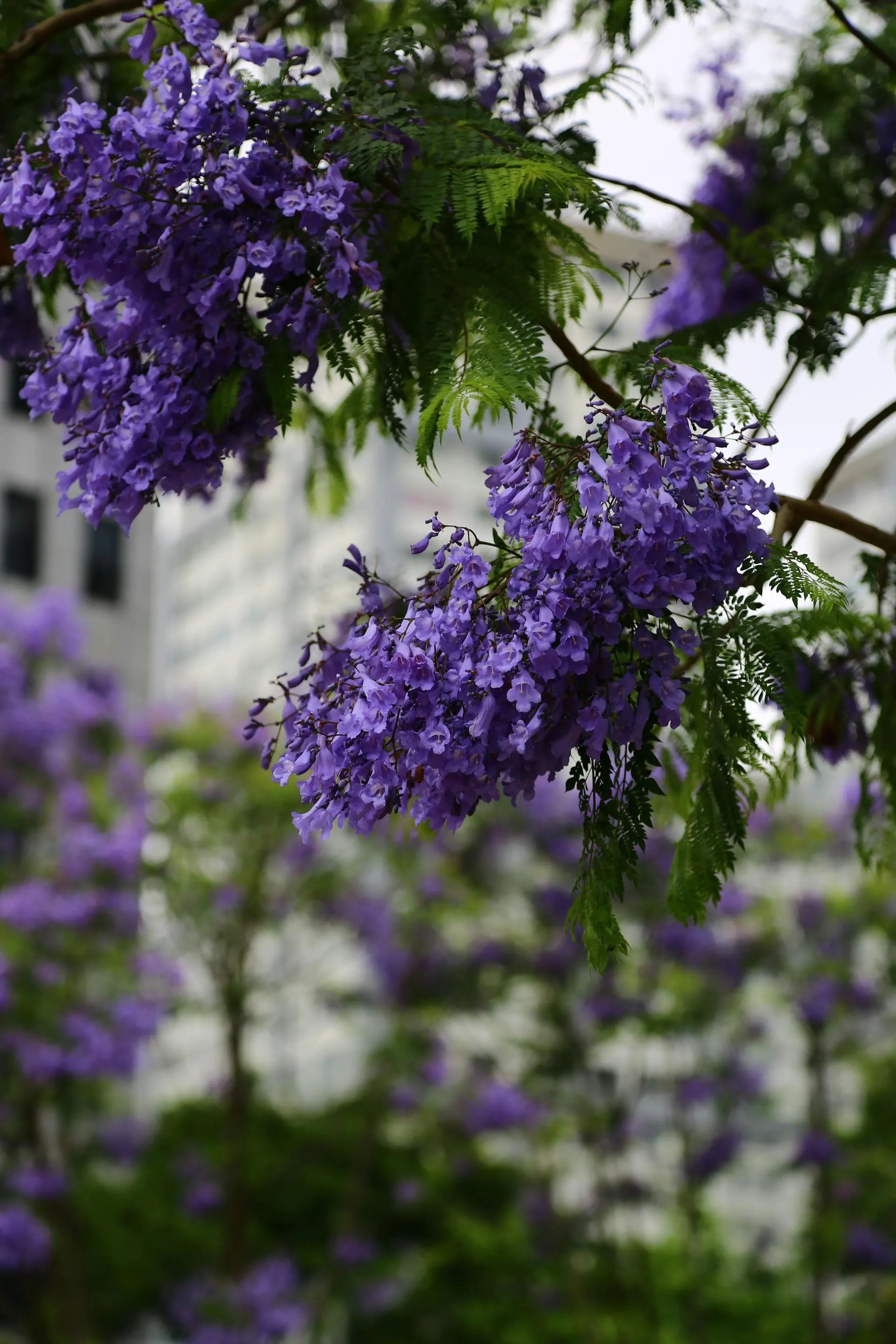
- Jacaranda (Jacaranda mimosifolia) — defines the spring streetscape across St Peters and Norwood. Reaches regulated trunk circumference at maturity. Council applications for healthy jacaranda removal are routinely refused or returned for rework. Pruning timing matters — see our jacaranda care guide for when to prune without affecting the spring bloom.
- Brushbox (Lophostemon confertus) — common from mid-century plantings; reaches regulated size.
- English elm (Ulmus procera) — older specimens around the Cathedral district and St Peters; often Part 10-listed.
- Liquidambar (Liquidambar styraciflua) — autumn-colour ornamental on larger blocks; reaches regulated size routinely.
The 3 m dwelling exemption applies to most of these (except where the tree is Part 10-listed) — but a regulated-size tree planted in the 1950s on a standard NPSP block is typically more than 3 m from the house, so the exemption rarely helps in practice.
Street trees, council-managed trees and the line between
NPSP manages around 27,000 trees on public land. The line between a council tree and a private tree decides who’s responsible for what.
If the trunk is on the verge or in a reserve
It’s an NPSP tree. Council manages it. You don’t prune, top, ring-bark or damage it — that’s tree-damaging activity on a council asset. If a council street tree is causing a problem (overhanging your driveway, damaging your driveway with roots, dropping branches), you call the council’s tree maintenance line. Council assesses; council acts.
If the trunk is on your land but the canopy hangs over council land
You own the tree. You’re responsible for tree-damaging-activity approvals. Overhanging branches into the public road are managed under the council’s verge clearance rules — typically a 4 m clearance over carriageway, lower over footpath — but the tree itself remains private.
If the trunk straddles the boundary
The trunk decides ownership. If most of the trunk at ground level is on private land, it’s a private tree. If it’s on council land, it’s council’s. A boundary tree where the trunk is split across the line is a rare case — talk to council before any work.
For overhanging branches into your property from a neighbour’s tree (rather than a council tree), the rules are different — see our neighbour tree and overhanging branches guide.
How NPSP compares to neighbouring councils
NPSP, Burnside and Unley all sit in the inner-east cluster and all run protective tree regimes. The differences:
- NPSP runs the most explicit canopy-cover strategy (Tree Strategy 2022–2027) and the largest council-managed tree population (~27,000 trees). Posture: canopy growth.
- Burnside runs the most active prosecution program — recent $10,000 conviction at Rosslyn Park (Feb 2025).
- Unley runs the most extensive published Significant Tree Register through Part 10 of the Planning and Design Code.
If your property is on the boundary between any two of these LGAs, double-check which council assesses your application — the canopy strategy of NPSP, the enforcement posture of Burnside, and the register depth of Unley each shape the practical experience differently.
Frequently asked questions
Who do I contact at NPSP for a tree application? Applications are lodged through the PlanSA portal, but NPSP’s planning and development team assesses them. The council’s “Regulated and Significant Trees” page is the entry point, and the planning team can be reached for pre-application advice — strongly recommended for any significant tree or any Part 10-listed tree.
Are jacarandas protected in Norwood? Yes — at the regulated level (1 m+ trunk circumference) and at the significant level (2 m+ or Part 10-listed). NPSP’s Tree Strategy 2022–2027 specifically protects mature jacaranda streetscapes. Removal applications for healthy jacarandas are assessed against the strategy and frequently sent back for further information.
What’s NPSP’s approach to private tree removals? The council’s posture is canopy retention. The state rules set the floor; NPSP applies them with a strong bias toward retention where the tree is healthy and structurally sound. Genuine safety cases — supported by a thorough arborist report that engages with retention alternatives — are approved. Applications driven by amenity issues (leaf litter, fruit drop, paving) are routinely refused or returned for rework.
Can I prune a council street tree in NPSP? No. Council street trees are managed by NPSP. If a council tree is causing a problem, contact the council’s tree maintenance line and they’ll inspect. Pruning a council tree without authorisation is tree-damaging activity on a council asset and is treated seriously.
How long does an NPSP application take? Most residential applications resolve in 4–8 weeks. Significant tree applications, Part 10-listed trees, and applications where the council requests additional information run longer. Build the timeline into your project — don’t lodge in week 1 of a renovation programme expecting approval by week 4.
Sources
- City of Norwood Payneham & St Peters — Regulated and significant trees
- City of Norwood Payneham & St Peters — Our trees
- PlanSA — Significant and regulated trees
- SA Legislation — PDIA (Regulated and Significant Trees) Amendment Regulations 2024
- SA Planning Commission — New rules to protect Adelaide’s tree canopy (16 May 2024)
This guide reflects the law and NPSP’s published Tree Strategy as we understand them on 5 May 2026. It is not legal advice. For a specific tree, get an arborist’s assessment and confirm the Part 10 listing status in writing before any work.