Tree Fox · Adelaide arborists
Overhanging Branches Neighbour Tree Adelaide — Your Rights
By Tree Fox · Published 5 May 2026
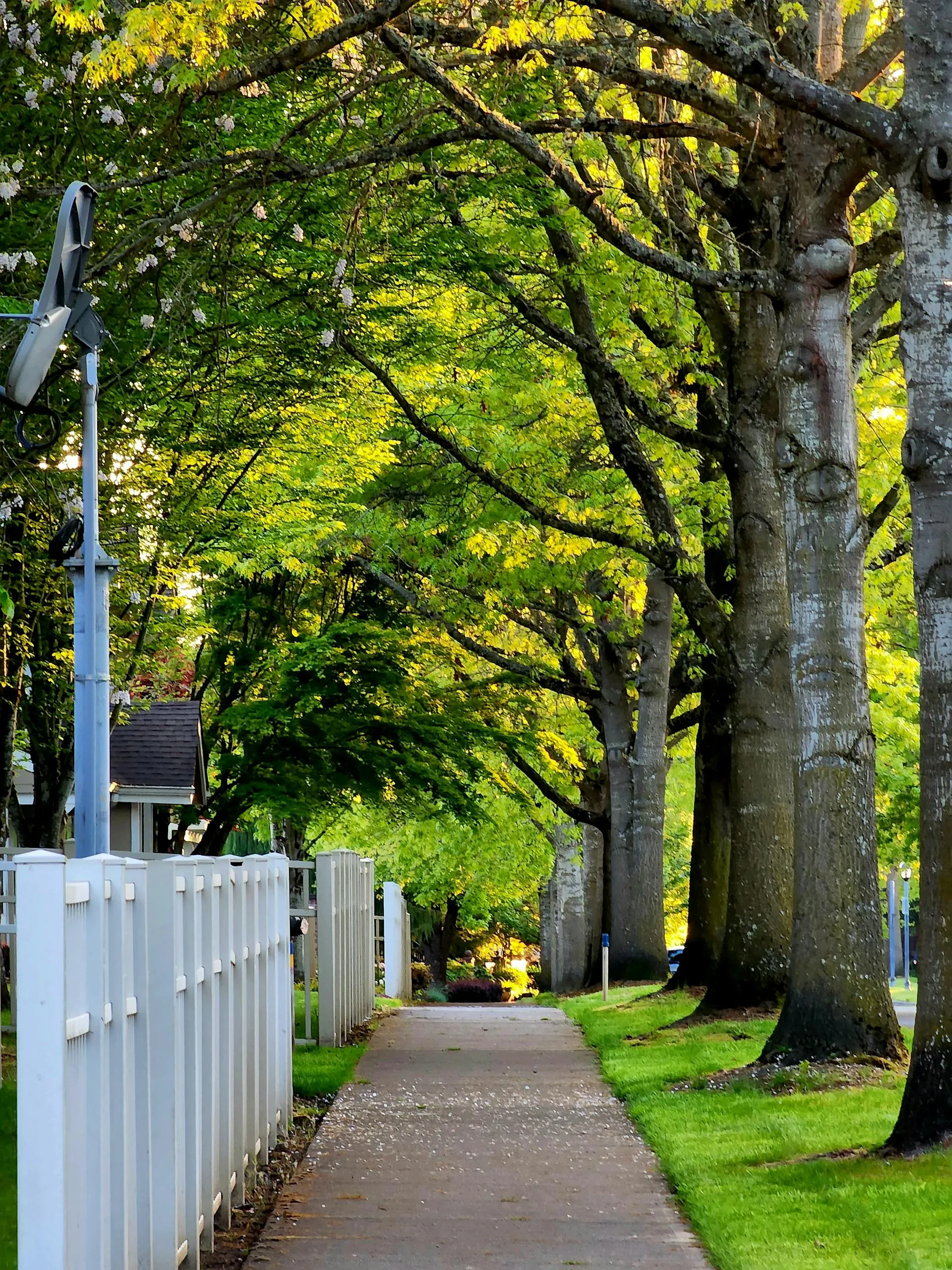
Overhanging Branches and Neighbour Trees in Adelaide — Your Rights, Their Rights, and the Boundary Line
Last updated: 5 May 2026.
In South Australia, you can prune overhanging branches from a neighbour’s tree back to the boundary line, on your side, at your own cost — as long as you don’t kill or destabilise the tree, you stay on your land, and the regulated-tree rules under the Planning, Development and Infrastructure Act 2016 (PDIA) aren’t breached. Ownership of the tree follows the trunk, not the canopy — if the trunk is on the neighbour’s land, the tree is the neighbour’s. You can’t enter their property without permission, and you can’t ignore the regulated-tree rules just because the branches are on your side. Damage claims between neighbours are heard in the Magistrates Court Minor Civil Actions Division, not SACAT. The framework is common-law nuisance plus the PDIA tree regime.
This guide explains your rights, your neighbour’s rights, the regulated-tree limits that override the common-law right, the dangerous-tree position, the boundary-tree question, and how to handle the conversation before it becomes a dispute.
What you need to know in 60 seconds
- You can prune overhanging branches back to the boundary, on your side, at your own cost.
- You can’t enter the neighbour’s land to do it.
- You can’t kill or destabilise the tree with the prune.
- Regulated trees (1 m+ trunk circumference) need development approval for tree-damaging activity — even from your side. The 30%-of-crown-in-five-years maintenance exemption applies, but anything beyond that needs council approval.
- Significant trees (2 m+, or Part 10-listed) — same rule, stronger. You can’t lop a significant tree from your side.
- Cuttings belong to you in practice (they’re on your land) — the etiquette is to ask whether the neighbour wants them back, not to dump them.
- Damage claims are heard in the Magistrates Court Minor Civil Actions Division. Common-law nuisance.
The legal principle — common-law abatement
The right to prune back to the boundary comes from the common law of nuisance. The Law Handbook SA explains it this way: where the branch or root of a tree comes onto a neighbour’s land, a nuisance situation exists. The neighbour can remove the encroaching branches or roots — at their own cost, on their own land, without going onto the tree owner’s property.
That’s the headline right. The constraints are real:
1. You stay on your land
You can prune to the boundary, on your side. You can’t reach across with a pole pruner to take a branch on the neighbour’s side because it’s “more efficient.” You can’t access from the neighbour’s driveway without their permission. The principle is that you’re abating a nuisance on your land — that authority doesn’t extend across the line.
2. Reasonable steps only
The cost of removing the encroaching branch isn’t recoverable from the tree owner unless the work was necessary to minimise damage already occurring. So, in practical terms: you pay for the prune, the neighbour doesn’t reimburse you, and you can’t bill them retrospectively unless there’s documented damage you were preventing.
3. Don’t kill or destabilise the tree
Pruning that materially affects the tree’s health or structural stability isn’t authorised by the abatement right. A heavy-handed back-to-the-trunk cut on a tree where most of the canopy is on your side is the kind of work that turns into a damage claim from the tree owner — because you’ve effectively destroyed their tree.
4. PDIA still applies
This is the part most articles miss. The common-law right to prune to the boundary is not a free pass on the regulated-tree regime. If the neighbour’s tree is a regulated tree (1 m+ circumference) or a significant tree (2 m+ or Part 10-listed), tree-damaging activity needs council approval. The maintenance exemption — light pruning, less than 30% of the crown, dead-wood and dangerous-limb removal, once every five years — applies regardless of which side of the boundary you’re standing on. Anything beyond that, including a serious back-to-the-boundary cut on a regulated tree, needs council approval.
The full regulated-tree framework is in our Adelaide tree removal permits guide.
Returning the cuttings
You can return what you cut. The etiquette is that cuttings on your side of the boundary are physically yours to dispose of, but the neighbour’s tree was the source — so the considerate move is to ask whether they want the cuttings back, particularly for a tree they value (a fruit tree, a pruned ornamental).
The patterns that turn into disputes:
- Dumping cuttings on the neighbour’s lawn without asking. Don’t do this. Even where you’re technically within your rights, it reads as hostile.
- Demanding the neighbour come and collect cuttings from your side. Don’t do this either. You did the cutting, you arrange the disposal.
- Taking quality timber (fruit, valuable hardwood) from a tree the neighbour values. Ask first.
The pragmatic default: chipping the prunings into mulch, putting larger pieces in green waste, and either offering the cuttings to the neighbour at the time of work or quietly disposing of them. Most neighbours don’t want the prunings back — but the courtesy of asking sets the tone for the next conversation.
Roots crossing the boundary
The same principle as branches. You can cut roots that cross onto your land, on your side, at your own cost. Same caveats:
- Don’t kill or destabilise the tree. Root cutting on a mature tree can do exactly that — root plates are structural. An arborist’s advice before you cut large roots is well worth the fee.
- Regulated tree rules apply. Severing major roots of a regulated tree is tree-damaging activity. Approval needed.
- Document any damage the roots have caused before cutting. If the roots have lifted your driveway, cracked a sewer pipe, or damaged paving, photograph it. Damage compensation claims need evidence.
For mature trees where the roots are causing structural damage to a building, an arborist report identifying the cause and the appropriate remedy (root barrier installation, paving alteration, partial removal under approval) is the right starting point. See our arborist report cost guide for what’s involved.
When the tree is regulated or significant
The boundary right doesn’t override the council rules. Three scenarios:
The tree is regulated (1 m+ circumference, not Part 10-listed)
You can prune within the maintenance exemption — light pruning, less than 30% of the crown, dead-wood and dangerous-limb removal, once every five years. Anything beyond that needs development approval, lodged through PlanSA, by the tree owner (they own the tree). You can’t lodge for a tree you don’t own — though you can ask the owner to lodge, or in dangerous-tree cases, push the council to act.
The tree is significant (2 m+ or Part 10-listed)
Stronger protection. The maintenance exemption is more limited; serious pruning needs approval. The tree owner is the only party who can lodge a council application. If the tree is healthy, council will generally not approve removal regardless of who lodges.
The tree is dead, dying, or imminently dangerous
The state-wide PDIA exemption applies — a dead, dying, or imminently dangerous regulated/significant tree can be removed without approval. But “imminently dangerous” needs documentation: an arborist report with photos and reasoning. If you’re the affected neighbour, an arborist report you commission is admissible evidence in a damage claim. If the tree owner is the one taking action, their arborist report supports the removal.
When the tree is dangerous — your duty of care
Where a neighbour’s tree presents a real and foreseeable danger to your property — a clearly diseased trunk, a major split limb, a tree leaning more steeply each season — you have rights and the neighbour has duties. The framework:
1. Document the condition
Photograph the tree from multiple angles. Date the photos. Note any visible decay, cavities, dieback, lean, or structural defects. If a branch has already failed, document the failure. See our how to tell if a tree is dangerous guide for what to look for.
2. Give written notice to the neighbour
Email or letter. State the problem, attach photos, ask the neighbour to take action — typically commission an arborist assessment. Keep a copy. The Law Handbook SA explicitly notes that documented written notice strengthens a future damage claim by establishing that the tree owner was aware of the problem and failed to take reasonable precautions.
3. If the neighbour does nothing
Options:
- Commission your own arborist report to formally establish the tree’s condition. The report is admissible if a claim follows. Cost: $400–$800 for a residential single-tree report.
- Engage council if the tree is a regulated tree and the danger is imminent. Council can issue notices to act. Burnside, in particular, is willing to engage on dangerous-tree cases.
- Document any damage that occurs. Photographs, dates, repair quotes, professional opinions on cause.
4. If damage occurs
Where the neighbour’s tree has caused property damage and the neighbour was on notice of the danger, a claim in the Magistrates Court Minor Civil Actions Division can recover the cost of repairs — provided you can establish foreseeability and notice. The Law Handbook SA frames it as: if the tree owner is unwilling to pay, the neighbour can apply to the Minor Civil Claims Division of the Magistrates Court for a court order.
The “act of God” exception applies — a healthy tree blowing down in a storm is generally not a foreseeable event the tree owner is liable for. A diseased or visibly defective tree blowing down in a storm, after written notice has been given, is a different conversation.
Trees on the boundary line itself
Where the trunk straddles the boundary (rare but real), ownership is shared. Practical approaches:
- Joint maintenance — both owners share the cost of pruning and any approved removal. The Fences Act 1975 (SA) governs fence-cost sharing, and while it doesn’t directly address trees on a boundary, the cost-sharing logic is similar in practice.
- Disagreement on action — if one owner wants the tree removed and the other doesn’t, you’re back to the regulated-tree regime (does it need approval?) and the common-law principles (can either owner unilaterally act?). The answer is generally no, not without the other’s consent.
- Damage allocation — if the tree fails and damages property, the dispute is between the affected party and both joint owners.
For boundary-tree cases where the tree is on or very close to a fence, see also the storm damage and tree insurance guide on how insurers handle fence and boundary scenarios.
How to handle the conversation with your neighbour
Most overhanging-branch issues are resolved between neighbours without legal intervention. The pattern that works:
Start with a conversation, not a letter
A doorstep chat or a phone call. “We’ve been thinking about getting an arborist in to prune the branches on our side — wanted to check before we did anything.” Most neighbours appreciate the heads-up; many will offer to share the cost or arrange a coordinated job.
Offer to share the cost where appropriate
For a tree both households benefit from — a heritage canopy tree, a mature deciduous on a shared streetscape — offering to share the cost of a coordinated prune is reasonable. Even if you’re entitled to do the work at your cost, the relationship is worth more than the saving.
Put the technical stuff in writing
Where the tree is regulated, the work scope is significant, or the relationship is already strained, follow up the conversation with a short written confirmation. “Following our chat — Arborist X is coming on Tuesday to prune the branches on our side. They’ll be on our property only. We’ll dispose of the prunings.” That email is your record if anything later goes wrong.
Mediation before court
If a dispute escalates and the neighbour won’t engage, community mediation services (Conflict Resolution Services SA) are a free or low-cost path before anything goes to court. The Magistrates Court Minor Civil Actions Division is the formal track if mediation fails — but it’s slow, public, and the legal costs aren’t always recovered. Mediate first.
Court as last resort
The Magistrates Court Minor Civil Actions Division hears damage claims up to a defined monetary limit. The procedure is more accessible than higher courts but still adversarial. By the time you’re filing, the relationship with the neighbour is over. Most experienced operators in this niche recommend exhausting every other option first.
When to call us
Three scenarios where Tree Fox’s work fits the neighbour-tree question:
- Overhanging branch pruning to the boundary — straightforward arboriculture work where the tree is yours, the regulated-tree rules either don’t apply or sit comfortably within the maintenance exemption, and the cut is a routine prune. See our tree pruning service page.
- A regulated tree where council approval is needed — we lodge through PlanSA on the property owner’s behalf, write the arborist report, and do the approved work. See arborist reports.
- A neighbour-dispute arborist report — independent assessment of a tree’s condition, written for evidentiary use in a dispute or claim. We don’t do the report and the work on the same job — the conflict compromises the report’s evidentiary value. See our arborist report cost guide.
Frequently asked questions
Can I cut my neighbour’s tree branches that hang over my fence in Adelaide? Yes — back to the boundary, on your side, at your own cost, without going onto the neighbour’s land, without killing or destabilising the tree, and within the regulated-tree rules under PDIA if the tree is regulated. The maintenance exemption (less than 30% of the crown, dead-wood and dangerous-limb removal only, once every five years) applies. Anything beyond that on a regulated tree needs council approval, which only the tree owner can lodge.
Do I have to give the cuttings back? Legally, the cuttings on your side of the boundary are yours in practice to dispose of. The etiquette is to ask the neighbour whether they want them back — particularly for fruit, valuable timber, or a tree the neighbour clearly values. Don’t dump cuttings on the neighbour’s property without asking; that’s a separate trespass.
What if my neighbour’s tree damages my property? Document the damage with photos, dates and repair quotes. If the tree’s condition was visibly defective and you’d given the neighbour written notice of the concern beforehand, the Law Handbook SA framework supports a damage claim in the Magistrates Court Minor Civil Actions Division. A storm-damage event from a healthy tree generally falls under the “act of God” exception. An arborist report establishing the tree’s pre-failure condition is the strongest support for a claim. For the routine (and recoverable) costs — sap on the windows, leaf and bird debris on the glass after a heavy drop — book Adelaide residential window cleaning once the prune is done and keep the receipts with the rest of the cleanup file.
Can I cut roots that come into my yard? Yes — on your side of the boundary, at your own cost, without destabilising the tree, and within the regulated-tree rules. Major root severance on a regulated tree is tree-damaging activity and may need approval. Get an arborist’s view before cutting roots from a mature tree — root cutting can compromise structural stability and turn into a damage claim from the tree owner.
Can I make my neighbour remove a dangerous tree? Not directly — but you can build the case. Step 1: document the condition. Step 2: give written notice to the neighbour, attaching photos. Step 3: if no action, commission your own arborist report to formally establish the danger. Step 4: where the tree is regulated, engage council — the council has powers to require action on dangerous trees. Step 5: if damage occurs, the prior written notice strengthens a damage claim. Persistent neighbour inaction on a documented dangerous tree is exactly the case the courts and councils were designed for.
Sources
- Law Handbook SA — Trees
- Law Handbook SA — Significant and Regulated Trees
- Legal Services Commission SA — Trees and the Law (PDF)
- SA Legislation — Fences Act 1975
- PlanSA — Significant and regulated trees
- SA Legislation — PDIA (Regulated and Significant Trees) Amendment Regulations 2024
This guide reflects the law of trees in South Australia as we understand it on 5 May 2026, primarily as set out in the Law Handbook SA. It is general information, not legal advice. For a specific dispute or damage claim, get advice from a community legal centre, the Legal Services Commission, or a solicitor — particularly before commencing court proceedings.