Tree Fox · Adelaide arborists
Storm Damage & Tree Insurance Claims Adelaide — Who Pays for What
By Tree Fox · Published 5 May 2026
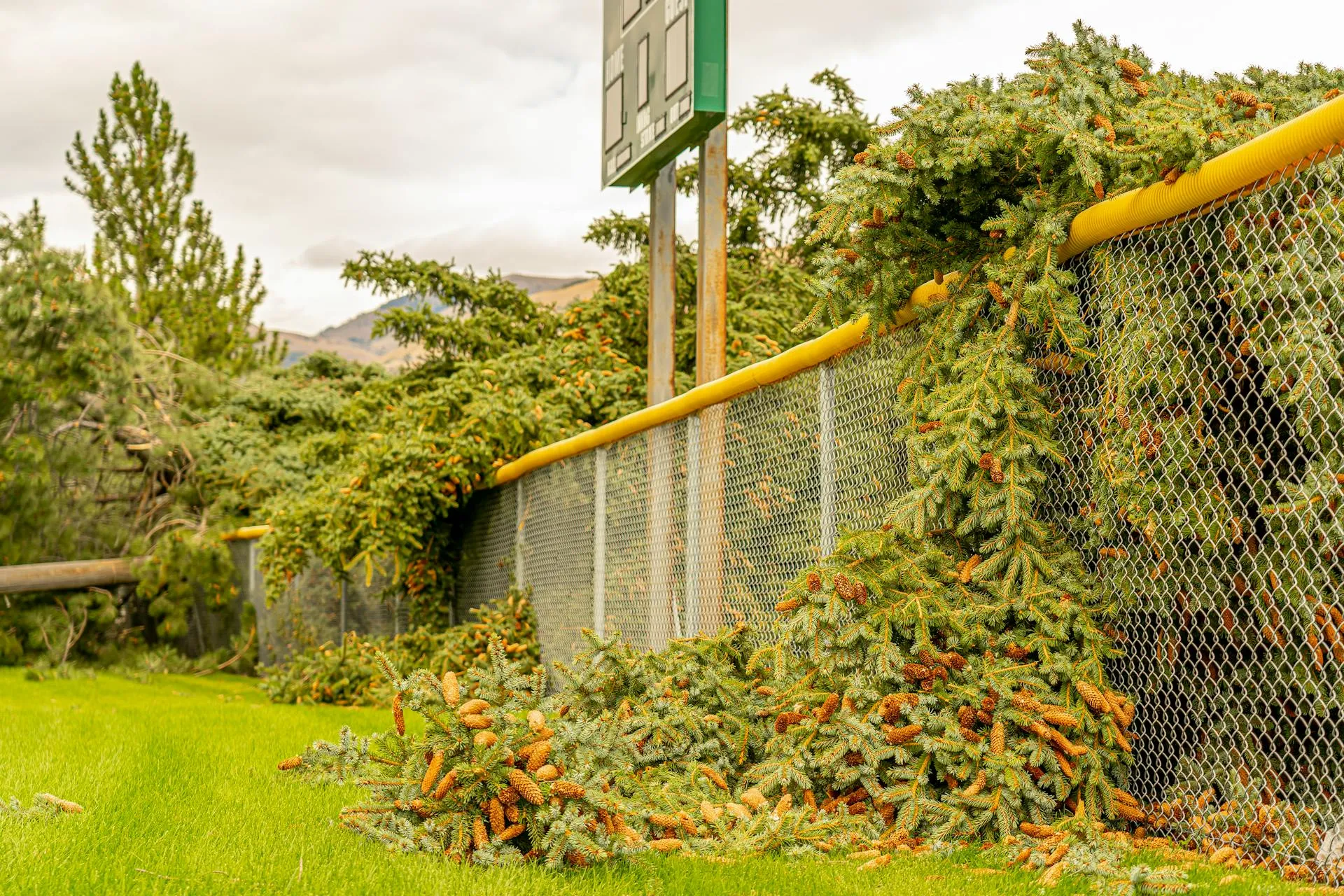
Storm Damage and Tree Insurance Claims in Adelaide — Who Actually Pays for What
Last updated: 5 May 2026.
In a storm event, Australian home insurance generally pays for damage to your insured property — your house, your structures, your contents — and for removing the tree from the damaged structure as part of that claim. It usually does not pay for clearing the rest of the tree’s debris from your land if it didn’t hit anything insured. If a neighbour’s tree fell on your house, you still claim through your own insurer; their insurer rarely pays unless negligence (e.g. you’d warned them the tree was dangerous) can be proven, and a storm event is normally treated as an act of nature where the negligence test isn’t met.
That’s the short version. The detail matters because policies differ, scenarios get tangled, and the wrong sequence of phone calls can cost you a covered claim. This article walks through what’s typically in scope, what isn’t, the neighbour-tree question in detail, the boundary-fence overlay, and how to actually run the claim.
Insurance specifics depend on your policy. The principles below are drawn from Insurance Council of Australia guidance and Financial Rights Legal Centre fact sheets — they describe typical Australian-market behaviour, not your individual cover. Read your Product Disclosure Statement and call your insurer’s storm line for advice on your situation.
For the immediate post-impact steps, see what to do when a tree falls on your house in Adelaide.
Who pays for what — the high-level map
| Scenario | Who typically pays |
|---|---|
| Storm-fallen tree damages your house | Your home and contents insurer (subject to policy and excess) |
| Storm-fallen tree damages your vehicle | Your motor (comprehensive) insurer |
| Neighbour’s tree falls on your house in a storm | Your home insurer, generally — they may pursue recovery if negligence is proven |
| Storm-fallen tree on your land, no structural damage | Usually your cost — most policies don’t cover non-structural debris removal |
| Healthy tree pre-emptively removed because it “looks dangerous” after storm | Your cost — preventative removal isn’t insured |
| Dead tree finally removed after the storm | Your cost — should have been done earlier; not covered |
| Tree on fence line between two properties | Often shared under the Fences Act 1975 (SA); insurance treats it case-by-case |
| Tree blocking your driveway only, no structural damage | Your cost — SES may attend for access; full removal usually not insured |
These are general patterns. Specific policies, excesses, and exclusions vary. Don’t authorise work on the strength of a table; talk to your insurer.
What “storm damage” usually means in your policy
Most Australian home and contents policies cover damage from storm, wind, hail, rainstorm, and lightning as named events. The Insurance Council of Australia summarises typical cover: if a tree or its branches fall in a storm and damage your home or contents, you’ll generally be covered.
What “storm” means is sometimes narrower than people think:
- A genuine weather event — wind, rain, hail, lightning that’s atypical or severe enough to cause the damage.
- A defined window — most policies treat the event as the period of the named storm, not a six-week run of bad weather.
- Causation — the tree fell because of the storm, not coincidentally during it.
This matters because the alternative isn’t usually covered. A tree that toppled in calm weather a week after a storm because the root plate had been weakened typically is still treated as storm damage if the arborist’s report ties the failure to the storm event. A tree that fell because it was already dead and the next breath of wind happened to push it over typically isn’t — that’s lack of maintenance, which is the policyholder’s responsibility.
The line between the two is often where insurance disputes happen. An AQF Level 5 arborist report ties the failure to the cause and is the document that resolves most of these arguments.
When your insurance covers tree damage
Generally covered under most standard Australian home and contents policies:
- Damage to the house and outbuildings caused by a storm-fallen tree — roof, walls, ceilings, glass, structural timber, gutters, garage doors, sheds, carports.
- Make-safe and emergency stabilisation by an arborist or builder — tarping damaged roofs, propping structural damage, securing the impacted area.
- Removal of the tree from the damaged structure — the part of the tree that hit something insured comes off as part of the claim.
- Damage to contents inside the house caused by the tree — broken furniture, water-damaged carpets, ceiling collapse, broken electronics.
- Temporary accommodation if the house is uninhabitable while repairs are done (most policies include this; check your sub-limit).
- Damage to fences and gates caused by the falling tree, subject to your policy’s fence coverage limit.
- Damage to the vehicle, if you have comprehensive motor cover and the tree fell on the car (claim runs through your motor insurer, not the home policy).
In each case the standard policy excess applies. Some policies have a separate storm excess that’s higher than the standard excess; check yours.
When insurance doesn’t cover tree work
This is where the disputes happen. A few common scenarios where tree work is not typically covered, even after a storm:
Preventative removal of a “now-looks-risky” tree
The neighbour’s tree across your fence line that “shifted” in the storm, or your own gum that the storm “loosened” — if it’s still standing and hasn’t damaged anything, removing it is preventative work. Maintenance, not damage. Your cost.
Cosmetic post-storm cleanup
The branches that came down across the lawn but missed the house. The leaves and small debris over the back garden. The fallen limb in the driveway that you can drag out yourself. Not damage to insured property; not covered.
Pruning that should have been done already
The branch overhanging your roof that broke in the storm and caused damage may be covered for the resulting damage. The remaining limb of the same tree that’s now an obvious risk and needs pruning is preventative work and your cost.
Removal of an already-dead tree
A dead tree was a maintenance issue before the storm. If it falls in a storm and damages something, the damage may be covered but the insurer will often investigate whether the tree’s condition was known to you. If it was — and you can be shown to have neglected to address it — the claim can be reduced or denied. The “I told them about that tree” rule cuts both ways.
A tree that fell with no storm event
A still-air tree-fall on your own property, with no storm to attach to, is not a covered cause under most policies. Even if it damages something insured, the policy needs a covered peril (storm, wind, fire, etc.) to engage.
General garden cleanup
Branches off your trees that didn’t fall on anything insured, leaves blown into gutters, post-storm garden tidy. Not insured; routine maintenance.
The neighbour’s tree on your house — who actually pays
This is the question that comes up in every storm event. Here’s the principle as it generally applies in Australia.
You claim through your own insurer. Whether the tree was yours or your neighbour’s makes no difference to the first phone call. Lodge with your insurer; they take the claim.
Your insurer assesses negligence and decides whether to subrogate. Subrogation is the legal right of an insurer to “step into your shoes” and recover the cost from a negligent party. They’ll consider:
- Did the neighbour know the tree was dangerous?
- Was there written notice from you, or from a previous arborist’s inspection, or from a council report?
- Did the neighbour have an opportunity to address the risk and fail to act?
- Is there evidence of pre-existing decay, fungal disease, or structural defect that an ordinary owner would have noticed?
If yes — and the tree’s condition is shown to have been the substantial cause of the failure rather than the storm — the insurer may pursue the neighbour’s insurer for recovery. You’d typically not see this; it happens between the insurers.
If the storm was the cause, no negligence applies. A genuine severe-weather event is treated as an act of nature, and a tree falling in such an event without pre-existing identifiable defect is not a negligent failure. Your insurer pays under your policy and that’s where it ends.
The “act of nature” position is consistent across major Australian insurers. It’s also the position taken by the Australian Financial Complaints Authority (AFCA) when these disputes are escalated.
The Financial Rights Legal Centre’s fact sheet on tree damage in storms is a useful plain-English summary of how these claims typically run; we’ve linked it in the sources at the foot of this article.
The “I told them about that tree” scenario
This comes up often enough to deserve its own section.
You’d noticed the neighbour’s tree was leaning. You’d noticed the bark splitting on the trunk. You’d mentioned it in passing at the front gate, or in a text, or after a previous storm. Then it fell and damaged your property.
What matters for your claim:
- Written evidence of notice. A text message, an email, a letter, a note in writing. Verbal “I mentioned it” is hard to prove and rarely moves the needle.
- The specificity of the notice. “Your tree looks dangerous” is weaker than “I had an arborist inspect this and the report identified your tree as a risk; here’s a copy.”
- Whether the neighbour had reasonable opportunity to act. Notice given the day before the storm doesn’t hold the neighbour to the same standard as notice given six months earlier.
- The arborist’s report on the tree’s condition after the failure. This is what ties the failure to a known defect rather than to the storm itself.
Even with strong evidence, the path is your insurer pursues the neighbour’s insurer through subrogation; you don’t sue the neighbour directly in most circumstances. The exception is small-claims action where the damage was uninsured or fell below your excess, in which case you’d take it through the Magistrates Court Minor Civil Actions Division — the correct forum for tree-damage claims between neighbours in SA. (SACAT does not hear tree disputes; the framework is common-law nuisance under the Magistrates Court’s minor-civil jurisdiction. See overhanging branches and neighbour trees in Adelaide for the full picture.)
For the broader neighbour-tree picture (overhanging branches, root encroachment, your right to abate), see our overhanging branches and neighbour trees in Adelaide guide once it’s live.
Tree on the boundary fence
A specifically South Australian wrinkle: the Fences Act 1975 (SA) governs cost-sharing for boundary fence repair and replacement. When a tree falls on a fence line:
- The fence damage is usually treated as standard fence damage under your home policy, subject to the policy’s fence sub-limit (typically a few thousand dollars). The neighbour’s policy can apply to their side.
- Sharing the cost of repair or replacement between neighbours follows the Fences Act notice procedure if you can’t reach informal agreement. The default principle, per the Law Handbook SA, is that neighbours contribute equally for an “adequate fence” to the agreed standard.
- The tree itself on the fence line — ownership follows the trunk. If the trunk straddles the boundary, both owners can have an interest, and the tree-removal scope and cost-sharing should be agreed in writing before work starts.
- The tree that was on one side and fell across the line — its removal is the responsibility of the property where the trunk originated, but in practice, in a storm event, both insurers typically participate in the make-safe and the cleanup runs through whichever side has the damaged structure.
The Fences Act notice procedure (Form 1 / Form 2 notices) is the legal path when neighbours don’t agree. The Legal Services Commission of SA publishes a plain-English guide; we’ve linked it in sources.
How to actually run a storm tree claim
The mechanics, in order.
1. Stay safe and document
We’ve covered this in detail in what to do when a tree falls on your house. The summary: don’t enter the impact zone, call 000 if anyone’s hurt, call SES on 132 500 for structural damage, photograph everything, stay 10 m back from any fallen powerline.
2. Lodge the claim before authorising work
The Insurance Council’s guidance is explicit: contact your insurer before you authorise any building or removal work, including emergency repairs. Unauthorised work may not be covered. Most major insurers have a 24-hour storm line during weather events.
You’ll need:
- Policy number.
- Address.
- Brief description of the event and the damage.
- Photos.
- Contact details for the assessor.
The insurer assigns a claim number and either authorises a make-safe scope of work or sends an assessor first.
3. Get the make-safe done
The arborist (and where needed, a builder or roofer) attends to stabilise the structure and remove the immediate threat. This is typically authorised by the insurer and runs as part of the claim, not as a separate out-of-pocket expense. Costs typically $500–$2,500 for the arborist make-safe portion; structural make-safe by a builder runs separately.
The make-safe arborist will provide a written report describing the tree, the failure, the cause (where determinable), and the make-safe scope. Keep this document — it’s central to the rest of the claim.
4. Assessor visit and full quote
Your insurer’s assessor either attends in person or assesses desktop using your photos and the arborist’s report. They’ll either:
- Authorise the full removal scope under the existing claim.
- Ask for a more detailed AQF Level 5 arborist report if the damage is significant or the cause is contested.
- Authorise their own preferred arborist or accept yours.
For the arborist-report side, see our arborist reports service page and arborist report cost in Adelaide (when published in this batch).
5. Full removal and repair
Once authorised, the full removal happens — typically a few days to a couple of weeks after the make-safe, depending on demand. The structural repair (roof, walls, glass) usually runs through the insurer’s preferred-builder network, in parallel with the tree work.
Replacement plantings — if council requires them under the regulated-tree rules — may be a separate negotiation with the insurer. Some policies include landscaping cover; many don’t.
6. Claim closure
Final invoices through the claim, excess paid by you (typically only once for the event), and the file closes. Keep copies of every document — assessor reports, arborist reports, photos, invoices. They matter if a related issue surfaces later.
Emergency vs scheduled removal — how it affects the claim
Insurers distinguish two scopes of work after a storm:
Emergency / make-safe. Same day or next day. Stabilisation. Removal of the immediate threat. Authorised quickly because the structure isn’t safe. Insurer’s pre-authorisation can be verbal in a phone call; the documented authorisation follows.
Scheduled / full removal. Days to weeks later. Controlled dismantling, debris removal, stump grinding, replacement plantings if required. Authorised on a written quote, usually at a per-line scope.
Pricing for the two scopes is different. Emergency work carries an after-hours or storm-event premium reflecting the rate, the lead-time pressure, and the queue-jumping. Scheduled work runs at standard removal pricing. Both should be on a fixed-price quote, not a time-and-materials run.
For non-emergency removal pricing across Adelaide, see tree removal cost in Adelaide.
Documentation checklist for a tree-damage claim
The claim runs smoother when you can hand the assessor a folder. Include:
- Pre-event photos of the tree (if you have any) — even a photo of the back garden from a year ago helps.
- During-and-after photos of the impact, the damage, and the tree’s position.
- The make-safe arborist’s report — written description, photos, scope of work, cost.
- Any prior arborist inspections of the tree (if you’d had one).
- Any written notice to a neighbour (or from a neighbour) about the tree’s condition before the failure.
- Receipts for any pre-storm tree work — pruning, dead-wooding, inspections — that show the tree was being actively maintained.
- The full removal quote from the arborist.
- The structural repair quote from your builder or roofer.
- Council notification if the tree was regulated or significant — see our tree removal permits in Adelaide guide.
The thicker the documented file, the smoother the claim. The thinner the file, the more the assessor relies on judgement, which is when claims slow down or get pushed back.
Frequently asked questions
Will my insurance pay for tree removal after a storm in Adelaide? Generally yes for the part of the tree that’s on your damaged structure under a standard Australian home insurance policy with a valid storm claim. The insurer typically pays for make-safe stabilisation and removal of the tree from the damaged building or vehicle. They usually don’t pay for cleanup of branches and debris elsewhere on your property if it didn’t hit anything insured. Always lodge the claim before authorising work — unauthorised work may not be covered.
What if my neighbour’s tree falls on my house? You still claim through your own insurer. They assess the damage and pay you under your policy. They may then pursue recovery from the neighbour’s insurer through subrogation, but only if negligence can be proven — typically that the neighbour knew the tree was dangerous, had reasonable opportunity to address it, and didn’t. A genuine storm event is normally treated as an act of nature where the negligence test isn’t met.
Does insurance pay to remove a dead tree? Generally no. A dead tree was a maintenance issue before the storm. If it falls and damages an insured structure, the resulting damage may be covered, but the insurer will often investigate whether the tree’s condition was known to you. Pre-emptive removal of a dead tree is not insured at all — it’s routine maintenance and your cost.
Do I need an arborist report for an insurance claim? Most claims will accept the make-safe arborist’s report and the full-removal quote. A formal AQF Level 5 arborist report is typically requested for larger or contested claims, particularly where the cause of failure (storm vs pre-existing defect) is the subject of the dispute. Your insurer’s assessor will tell you if a full report is required.
Who pays if a tree falls on the fence? Damage to the fence itself is typically covered under the fence sub-limit of your home policy. Replacement of the fence between two properties is covered under the SA Fences Act 1975 cost-sharing principles — typically split equally for an adequate fence, with the Fences Act notice procedure as the legal path if neighbours don’t agree. The tree itself is the responsibility of the side where the trunk originated; in practice, both insurers usually engage when the storm caused the failure.
Will my insurance cover tree damage to my car? That’s a motor claim, not a home claim. If you have comprehensive motor insurance, a tree falling on the vehicle in a storm is typically a covered event under “storm damage” or “falling objects” depending on the policy wording. Lodge with your motor insurer, not your home insurer. Third-party-property and third-party-fire-and-theft policies generally don’t cover this.
Is the SES free in South Australia? Yes. SA SES is a volunteer-staffed service and the make-safe response — tarping a damaged roof, propping structural damage, clearing access — is provided at no cost. Their role is stabilisation, not full removal. The full removal is an arborist’s scope and runs through your home insurance claim where applicable.
How long does a storm tree claim take to resolve? Make-safe, day 1. Assessor visit, days 2–5. Full removal scheduled, days 5–14 in a typical claim. Structural repairs, weeks-to-months depending on damage extent. Major catastrophic events — like the storms that drove Australia’s $4.8 billion in insured losses across 2025 (per the Insurance Council of Australia) — push every step out because every operator is at capacity simultaneously.
Sources
- Insurance Council of Australia — Storms
- Insurance Council of Australia — Hail events push extreme weather costs to $4.8 billion in 2025
- Financial Rights Legal Centre — Tree damage in a storm fact sheet
- Law Handbook SA — Sharing costs between neighbours (Fences Act)
- SA Legislation — Fences Act 1975
- SA SES — When to Call 132 500
Insurance specifics depend on your policy. The principles above describe typical Australian-market behaviour and are not a substitute for advice from your insurer or a licensed broker.