Tree Fox · Adelaide arborists
How to Tell if a Tree Is Dangerous — Adelaide Guide
By Tree Fox · Published 5 May 2026
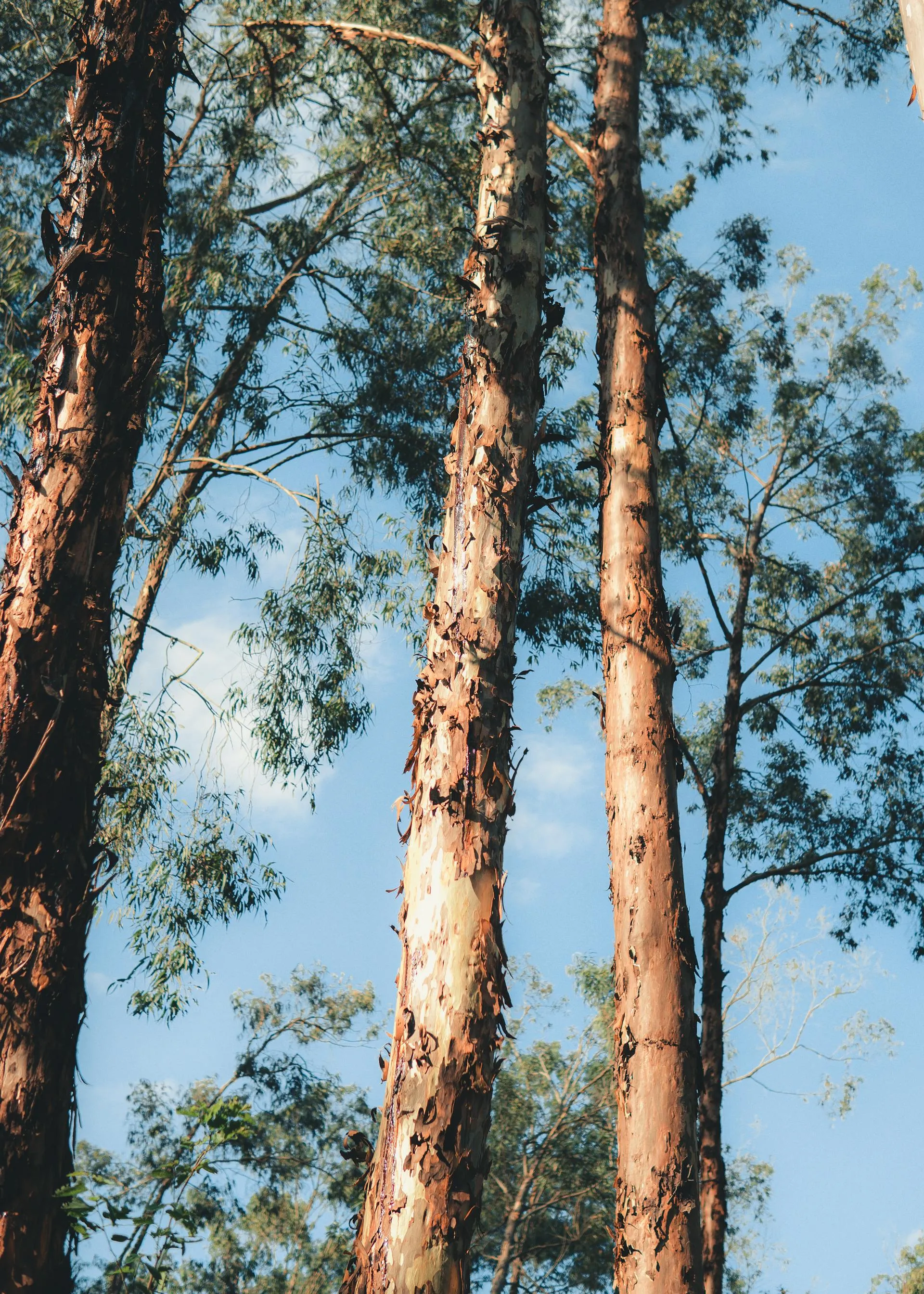
How to Tell if a Tree Is Dangerous: 9 Warning Signs (and What to Do)
Last updated: 5 May 2026.
A tree is dangerous when its structure can no longer reliably hold itself up under normal load — wind, rain, the weight of its own canopy. The clearest warning signs are: a new lean, a hollow or split trunk, large dead branches in the canopy, fungal brackets at the base, lifted or cracked soil around the roots, bark falling away in sheets, included bark in major unions, deep cracks or seams in the trunk, and canopy dieback in the upper third. If a tree shows any of these — and especially if it shows two or three — it should be inspected by a qualified arborist before the next storm.
This guide walks through each sign, what it looks like in the species you’ll see in Adelaide gardens, and the right next step.
What “dangerous” actually means
A tree being old isn’t dangerous. A tree being big isn’t dangerous. A tree being near the house isn’t dangerous on its own. Structural failure is what’s dangerous — and structural failure has visible signs you can usually spot from the ground. The job is to recognise the signs and know when to escalate.
Two practical rules of thumb:
- One sign on its own is a flag — get it checked but don’t panic.
- Two or more signs together is closer to a decision. Especially if the tree is uphill or upwind of something you care about.
The 9 warning signs
1. A new or worsening lean
A tree that has always leaned the same way isn’t necessarily a problem — many trees grow toward the light or away from a dominant neighbour. The danger sign is a lean that has changed recently or is getting worse.
Look for:
- A trunk that no longer matches the angle it had in older photos.
- Soil that’s lifted, cracked, or dome-shaped on the side opposite the lean (the root plate rotating).
- Tension cracks in the soil arcing around the base.
A “fresh” lean — particularly one that appeared after a storm or wet weather — is one of the strongest predictors of imminent failure. It means the root plate has started to move. Don’t wait.
In Adelaide this often shows up in river red gums and sugar gums on Hills slopes after winter rain saturates the soil. The combination of a high windload canopy and saturated foothills clay is the classic failure scenario.
2. A hollow or split trunk
Hollows aren’t automatically dangerous — many old trees support healthy canopies on a thin shell of sound wood, and the wildlife habitat value of hollows is significant. The danger is in the proportion: when the hollow is more than about a third of the trunk’s diameter, the remaining wood may not be enough to carry the load.
What to look for from the ground:
- A visible cavity at the base or in the trunk.
- A hollow sound when you tap the trunk with a heavy mallet (compared to tapping a known-solid section).
- Sawdust at the base — possible borer activity inside an apparent hollow.
- A vertical crack or seam alongside the hollow (combination is much more serious than either alone).
A split trunk — a vertical fissure deep into the wood — is a higher-risk sign. Especially in lemon-scented gums and river red gums, longitudinal cracks can run several metres and indicate the tree is mid-failure even when it looks otherwise healthy.
3. Large dead branches in the canopy
Dead branches (also called “deadwood” or “stags”) are normal in older trees. They become dangerous when they’re:
- Big — anything thicker than your wrist, especially anything over 100 mm diameter.
- High — the higher up, the more energy when it falls.
- Over a target — driveway, deck, kids’ play area, the dog’s run.
Eucalypts are notorious for shedding large dead limbs, often on still summer days with no warning. The phenomenon is sometimes called “summer branch drop” — limb failure under no obvious load. River red gums (Eucalyptus camaldulensis) and lemon-scented gums in particular have well-documented summer-drop patterns. If you have a gum with deadwood over a usable area, that’s a removal-or-prune decision, not an “ignore it” decision.
4. Fungal brackets at the base or on the trunk
Fungal fruiting bodies (brackets, conks, mushroom-like growths) on the trunk or at the base are a direct sign that wood-decay fungi are active inside the tree. The fungus you see is the fruit; the decay is what’s already happened internally.
Common species to recognise:
- Honey fungus (Armillaria) — clusters of honey-coloured mushrooms at the base, often after rain.
- Bracket fungi — shelf-like fruiting bodies on the side of the trunk, often grey-brown or banded.
- Phaeolus schweinitzii — large brown rosette-shaped brackets at the base, common on conifers and some eucalypts.
A fungal bracket on a structural part of the tree (the lower trunk or a major branch) is an arborist-level concern. It doesn’t always mean immediate failure — but it means the tree’s load-bearing capacity is reduced. Get it assessed.
5. Lifted, cracked, or domed soil around the base
This is the partner sign to a new lean. Even before the lean is visible, the soil tells you. Look for:
- A ridge or dome of soil on one side of the trunk.
- Cracks in the lawn or paving radiating out from the tree.
- Roots visibly lifted out of the ground on the opposite side of the lean direction.
- A gap opening up where the trunk meets the soil on the leaning side.
In Adelaide’s clay soils — particularly in the eastern foothills and the Hills — root plate movement after sustained wet weather is one of the more common storm-related failure modes. If you see soil disturbance after a wet week, treat it as urgent.
6. Bark falling away in sheets
Bark naturally sheds on many Australian species — eucalypts famously so. Normal seasonal shedding is fine. The warning sign is bark falling away to expose dead wood underneath: dry, dark, no green cambium layer, often with insect tracks.
Patches of bare wood on the trunk indicate cambium death — the tree has lost its ability to transport water and nutrients in that section. Large patches mean the tree’s structural function in that section is compromised.
What you’ll see in Adelaide species:
- Plane trees (Norwood, Unley, NPSP streetscapes) — naturally shed bark in patches; doesn’t mean the tree is dying. Look for dead wood underneath, not just bare-wood patches.
- Eucalypts — annual ribbon-bark shedding is normal. Dead wood patches are not.
- Liquidambars and jacarandas — bark damage usually means borer activity or fungal canker. Worth checking.
7. Included bark in major unions
A “union” is where two stems meet — typically where the trunk splits into co-dominant leads. The danger sign is included bark: bark trapped between the two stems instead of solid wood, creating a structurally weak join.
How to spot it:
- Look at the major Y-junctions in the canopy.
- A tight, V-shaped crotch with bark ridge running into the gap is the sign.
- A wide, U-shaped crotch with smooth wood at the join is sound.
Included bark is the classic failure mode for liquidambars, jacarandas, and many ornamental tree species in established Adelaide gardens. The tree often looks fine for years and then sheds half its canopy in a storm because the union finally opened up. This is a prune-or-cable decision before it becomes a removal decision.
8. Deep cracks or seams in the trunk
Vertical cracks running up the trunk are a serious sign — particularly if they’re:
- More than about 25 mm wide.
- Long (more than half the trunk’s height).
- Accompanied by sap, weeping, or fungal activity.
- On a tree that has shown other warning signs.
Frost cracks in deciduous trees are usually superficial and not structural. Storm-damage cracks are typically the dangerous kind. If a trunk crack opened up after a wind event, it’s an arborist-on-site situation, not a “we’ll see how it goes” situation.
9. Canopy dieback — bare patches in the upper third
A tree’s upper canopy is the last part to give up. When the top of the canopy thins out, drops leaves out of season, or shows obviously bare branches against a leafy lower section, the tree is in trouble.
Causes vary — drought stress, root damage, fungal disease, salt incursion in coastal areas — but the practical implication is the same: a tree with significant upper-canopy dieback is a tree on a downward trajectory, and the dead branches up high are a falling hazard.
In Adelaide’s drought-summer climate, dieback in older eucalypts has been an ongoing concern. The tree often has years left, but with careful management — and often an arborist report and council approval, because the tree is usually regulated. See our arborist reports service page for assessment work.
What to do when you see warning signs
The right response depends on how many signs are present and what the tree threatens.
One mild sign, no target
Example: minor canopy thinning on a tree at the back fence with nothing under it. Action: keep an eye on it. Note when it changes. Get an arborist to look at it on the next routine pruning visit. Not urgent.
One serious sign, or multiple mild signs
Example: a fungal bracket at the base of an otherwise healthy tree, or canopy thinning plus some bark loss. Action: book a paid arborist inspection. The arborist may recommend pruning, cabling, or — in some cases — no action other than monitoring. See tree pruning for ongoing canopy management.
Multiple serious signs or any single severe sign over a target
Example: a fresh lean, plus soil cracking, on a tree near the house. Or a deep trunk crack on a sugar gum over the carport. Action: don’t wait. Get an arborist out today. If the tree is unsafe to be near, exclude the area first and call.
Acute emergency: imminent failure
Example: a tree that’s started to fall, a major limb that’s split and is hanging, or storm damage that’s compromised structure. Action: stay clear of the drop zone, call the SES on 132 500 if it’s on a structure or threatens public safety, and call an emergency arborist for stabilisation or removal. Our storm damage and emergency removal line is 24/7.
The council rule that matters
If the tree you’re worried about is dead, dying, or imminently dangerous, you can generally remove it without a development application — but you need to be able to demonstrate the condition. Most councils accept a written arborist report with photos and reasoning.
A regulated tree (trunk circumference 1 m or more, measured 1 m above the ground) that you remove on safety grounds without documentation is exposed to enforcement action. Even when you’re right about the tree, the absence of paperwork is the gap that gets prosecuted.
The full council rules — what’s regulated, what’s exempt, how to lodge an application — are in tree removal permits in Adelaide.
Adelaide-specific risk factors
A few patterns we see more here than elsewhere:
- Foothills gum trees on saturated clay — Hills, eastern foothills (Stonyfell, Mt Osmond, Beaumont), southern foothills (Belair, Blackwood). The combination of mature gum + sloped clay + wet winter is the textbook root-plate failure scenario. After three days of solid rain, walk the property and look at the bases.
- Storm season (June–September) — most calls we take are in this window. The signs above are the same year-round, but they get tested in storm season.
- Bushfire overlay properties — Hills, Mitcham, Tea Tree Gully foothills. CFS site assessments often flag trees within 20 m of the dwelling, and the regulated-tree exemption for that distance is one tool. See Adelaide Hills service area for context.
- Coastal salt exposure — Henley, Glenelg, Brighton. Salt-affected canopy dieback in non-coastal species is a real pattern. Norfolk Island pines and palms tolerate it; jacarandas and liquidambars near the coast often don’t.
- Pre-summer self-checks — late winter and spring are the right time to walk the property, ideally with a phone camera. Photograph every tree from the same angle each year and the changes will be obvious.
When to call vs when to keep watching
| Situation | What to do |
|---|---|
| Single mild sign, nothing under the tree | Note it. Re-check next season. |
| Single serious sign (fungal bracket, included bark, dead limb over a target) | Book an arborist inspection within 1–2 weeks. |
| Two or more signs together | Get an arborist out within a week. Don’t park under it in the meantime. |
| Fresh lean, soil disturbance, or crack opened after a storm | Same-day inspection. Exclude the drop zone. |
| Tree partially fallen, split, or actively failing | Emergency line. Stay clear. |
For non-emergency assessments, a written arborist report runs $400–$800 for a typical residential tree. For emergency response, see our storm damage line.
FAQs about dangerous trees
How can you tell if a tree is going to fall? The strongest predictors are a fresh or worsening lean, soil disturbance around the base (lifted or cracked soil, root plate movement), a deep trunk crack or seam, fungal brackets on the lower trunk, and significant canopy dieback. Any one of these warrants an arborist inspection. Two or more together is closer to an immediate decision.
Is a leaning tree dangerous? Not all leaning trees are dangerous — many trees grow with a permanent lean and are stable. The danger is a lean that’s new or getting worse, especially with soil cracking on the opposite side. A fresh lean is one of the strongest warning signs of imminent failure.
Are hollow trees always dangerous? No. Many old trees carry significant canopy on a thin shell of sound wood and remain stable for decades. The risk depends on how much sound wood is left around the hollow, the tree’s species, and what’s underneath it. Get a qualified arborist to assess the wall thickness — they may use a resistograph or sounding technique.
What’s the most dangerous tree species in Adelaide? Eucalypts — particularly river red gums (E. camaldulensis), sugar gums (E. cladocalyx), and lemon-scented gums (Corymbia citriodora) — have the highest unprompted limb-drop rates in the metropolitan species mix. They’re not dangerous per se, but they need active management when they’re near targets.
Can I remove a dangerous tree without council approval? Dead, dying, and imminently dangerous trees are exempt from the regulated and significant tree rules — but you need to document the condition before removal. An arborist report is the standard evidence. Removing a regulated tree on safety grounds without documentation is the most common cause of council enforcement.
Who do I call in a tree emergency in Adelaide? For trees on structures or threatening public safety, the SES on 132 500. For storm damage requiring an arborist, our 24/7 emergency line (see the emergency removal page). For non-emergency safety inspections, book a paid arborist assessment.
How often should I get my trees checked? For mature trees (especially eucalypts) near targets, an arborist inspection every 2–3 years is reasonable. After a major storm, walk the property yourself and look for the signs above. Take dated photos.
Sources
- PlanSA — Significant and regulated trees (dead/dying tree exemption)
- SA CFS — Native vegetation management and bushfire safety
This article is general guidance, not a substitute for an on-site assessment by a qualified arborist. If a tree concerns you, get it inspected.