Tree Fox · Adelaide arborists
Tree Removal Permit Unley — Significant Tree Register Guide
By Tree Fox · Published 5 May 2026
Tree Removal Permits in Unley — A Plain-English Guide to the Significant Tree Register
Last updated: 5 May 2026.
If your tree is in Unley, two things matter: the state-wide regulated/significant tree rules under the Planning, Development and Infrastructure Act 2016 (PDIA), and the Unley Significant Tree Register — a list of individually nominated trees published in Part 10 of the South Australian Planning and Design Code. A tree on the register is protected at the significant level regardless of its measurement. A tree off the register is protected if its trunk is 1 m or more in circumference. Either way, removal or major pruning needs development approval, lodged through PlanSA, with a maximum penalty of $120,000 for unauthorised work.
Unley is a heritage-character LGA. Goodwood, Hyde Park, Malvern, Wayville and the King William Road / Goodwood Road corridors are saturated with mature plane trees, jacarandas and lemon-scented gums. Most of them are at or above the 1 m regulated threshold. This guide walks through the register, the application process, and what owners actually need to do.
What’s regulated, what’s significant, and what’s the register
In Unley, three layers of protection can apply to the same tree:
- Regulated tree (state rule, PDIA): trunk circumference of 1 m or more at 1 m above natural ground level. Approval needed for any tree-damaging activity.
- Significant tree (state rule, PDIA): trunk circumference of 2 m or more, or individually listed in Part 10 of the Planning and Design Code. Stronger protection.
- Listed in Part 10 (the Unley Significant Tree Register): an individual tree nominated and gazetted under the Code. Protected at the significant level even if its measurements wouldn’t otherwise reach 2 m.
The post-16 May 2024 thresholds (regulated 1 m, significant 2 m, dwelling exemption shrunk to 3 m, eucalypts/corymbia/angophora/willow myrtle excluded from that exemption) apply across SA. Unley adds the register.
The full state-wide framework is in our Adelaide tree removal permits guide. This page covers what’s specific to the City of Unley.
How the Unley Significant Tree Register works
Part 10 of the Planning and Design Code lists significant trees by individual address and species. The Code is published on PlanSA; the City of Unley maintains the working copy of the Unley schedule and accepts nominations for additions to the register.
What “listed” means in practice
If your tree is listed:
- Any tree-damaging activity — removal, ring-barking, severing of branches or trunk, root damage, topping or lopping — is prohibited without development approval.
- The 3 m dwelling exemption does not apply. You cannot remove a listed tree because it sits within 3 m of your house. The species exemption exclusions (eucalypt etc.) are irrelevant — the listing overrides everything except the genuine emergency / dead-or-dying / Bushfire Overlay carve-outs.
- Maintenance pruning of less than 30% of the crown to remove deadwood or branches creating a building or amenity risk is generally exempt — but not for a listed tree if the pruning would materially affect health or appearance.
How to check if your tree is listed
Three options:
- Search the Unley Part 10 schedule — the council’s most recent review-nominations document and the existing-list audit are published on the City of Unley website. The schedule lists individual trees by street address.
- Check the South Australian Property and Planning Atlas (SAPPA) — the state government’s mapping tool flags regulated and significant tree overlays at the address level.
- Ask council — Unley’s planning team will confirm whether a tree on a property is on the register. This is the safest route before any work.
If the tree is on the register, assume any work needs application. If it’s off the register, you fall back to the state-wide regulated/significant rules.
Heritage Character Zone overlay and how it interacts with tree rules
Most of inner Unley sits within a Heritage or Character Zone overlay under the Planning and Design Code. The overlay restricts demolition and external alterations to dwellings — it doesn’t directly add to the tree-protection regime, but it shapes the way council assesses applications.
In practical terms: a regulated tree application on King William Road, Goodwood Road, or in the heritage areas around Wayville Showground gets weighted against the streetscape. Council planners are generally less inclined to approve removal where the tree is part of an established avenue or heritage frontage. The arborist report needs to engage with that — not just the tree’s individual condition, but the streetscape contribution.
The Heritage Character Zone also raises the bar for replacement plantings. If a removal is approved, the replacement requirement is more likely to be species-matched (plane for plane, jacaranda for jacaranda) and more likely to be enforced.
The application process for an Unley regulated or significant tree
The mechanics follow the state-wide PDIA process. The Unley specifics are in the documentation expectations.
1. Confirm the tree’s status
Measure the trunk circumference at 1 m above natural ground. Check the species. Check the Part 10 schedule for the address. If the tree sits at 1 m+ circumference and isn’t on the listed-exempt species schedule, assume regulated.
2. Commission an arborist report
Unley applications need a council-grade arborist report — typically from an AQF Level 5 consulting arborist. The report addresses tree health, structural condition, demonstrated risk, alternatives to removal (reduction pruning, cabling, monitoring), photographic evidence, and — for a Heritage / Character Zone or listed-significant tree — engagement with the streetscape value. Pricing detail is in our arborist report cost guide and the scope is on the arborist reports service page.
3. Lodge through PlanSA
Application is via the PlanSA portal. The application fee for a residential tree-damaging activity sits in the $200–$500 range (varies by application type and is updated on Unley’s schedule of fees). Significant trees and multi-tree applications attract higher fees.
4. Wait for the decision in writing
Most Unley residential applications resolve in 4–8 weeks. Listed significant tree applications, applications in Heritage Zones, or applications on contested species can run longer. Don’t cut until the approval is in writing.
5. Replacement plantings
If approval is granted, expect a condition requiring replacement plantings — typically a 1:1 or 2:1 ratio depending on the species and age of the removed tree. Replacement plantings get checked.
Common Unley species we see needing approval
The Unley tree population skews European deciduous and ornamental, with native eucalypts on the larger blocks. The species we see most often in applications:
- London plane (Platanus x acerifolia) — Goodwood Road, Unley Road, residential streetscapes. Reaches 1 m circumference within 30–40 years on a regular suburban block. Frequently listed in Part 10.
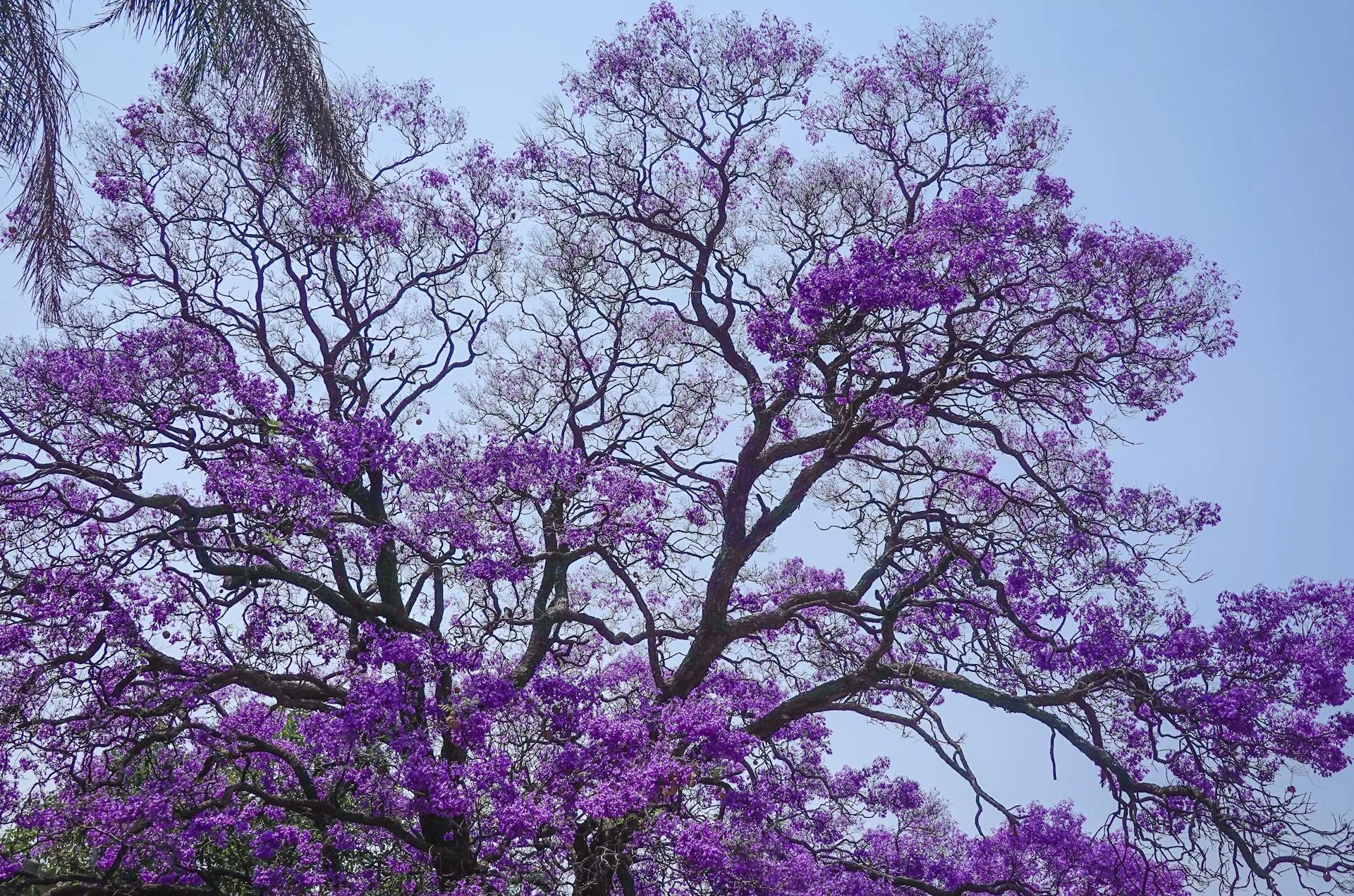
- Jacaranda (Jacaranda mimosifolia) — Hyde Park, Malvern, Unley Park back gardens. Reaches regulated size at maturity; aesthetic value is high so council often resists removal applications for healthy specimens.
- Lemon-scented gum (Corymbia citriodora) — common on the larger Malvern/Unley Park blocks; Corymbia is excluded from the 3 m exemption.
- Claret ash (Fraxinus angustifolia ‘Raywood’) — ornamental street and front-garden tree; reaches regulated trunk circumference; not exempt.
- Liquidambar (Liquidambar styraciflua) — autumn-colour species in 1950s–80s era gardens; reaches regulated size routinely.
The Unley FAQ on protecting regulated and significant trees, published by council, addresses the most common owner questions and is a primary reference for the application process.
For pruning timing on these species — particularly plane and jacaranda — see our best time to prune trees in SA guide.
How Unley compares to Burnside
Unley and Burnside both have heavy regulated-tree concentrations and active tree-management strategies. The differences:
- Burnside is the most-active prosecutor. Its February 2025 conviction at Rosslyn Park is the headline metro precedent. Unley enforces, but the prosecution rate is lower.
- Unley runs the most extensive published Significant Tree Register in metro Adelaide. Part 10 includes individually listed trees in Adelaide City, Burnside, Prospect and Unley council areas. Unley’s schedule is public and is updated through formal review processes.
- Both councils run on the standard PDIA regime. The application process is the same; the assessment posture is similar. If anything, Unley applications turn on streetscape considerations while Burnside applications turn on enforcement risk.
If your property sits across a council boundary or you’re not sure which council assesses a particular application, our Burnside permit guide covers the equivalent process for the neighbouring LGA.
Frequently asked questions
How do I check if my tree is on the Unley Significant Tree Register? The Unley schedule is part of Part 10 of the South Australian Planning and Design Code, published on PlanSA. The City of Unley also publishes the Unley-specific schedule and review nominations on its website. The South Australian Property and Planning Atlas (SAPPA) flags significant tree overlays at the address level. If you can’t find a definitive answer, ask the council planning team — they’ll confirm.
Can I prune a regulated tree without approval in Unley? Light maintenance pruning of less than 30% of the crown — limited to deadwood and branches creating a structural or amenity risk — is exempt under the state regulations, and that exemption applies in Unley. Anything beyond that on a regulated tree (and most pruning on a listed significant tree) needs development approval.
What’s the Unley application fee? Council application fees for tree-damaging activity sit in the $200–$500 range for a residential application, set under Unley’s schedule of fees and charges. Significant tree applications and multi-tree applications attract higher fees. Confirm the current fee on the Unley website before lodgement.
Are species on the listed-exempt schedule still protected if they’re individually listed in Part 10? Yes. A tree individually listed in Part 10 is protected at the significant level regardless of its species. The listed-exempt species schedule (Box Elder, Silver Maple, Cocos / Queen Palm, Cotton Palm, Weeping Willow and others) doesn’t override an individual listing. If the tree is on the register, treat it as significant.
Does Unley enforce as actively as Burnside? Both councils enforce. Burnside has the higher-profile recent conviction (Rosslyn Park, February 2025, $10,000 fine). Unley’s posture is structured and consistent rather than headline-grabbing — applications are assessed thoroughly, replacement-planting conditions are followed up, and the published register makes the rules harder to claim ignorance of.
Sources
- City of Unley — Trees
- City of Unley FAQ — Protecting Regulated and Significant Trees (PDF)
- Part 10 Planning and Design Code — Unley significant trees review nominations (PDF)
- PlanSA — Significant and regulated trees
- SA Legislation — PDIA (Regulated and Significant Trees) Amendment Regulations 2024
- SA Planning Commission — New rules to protect Adelaide’s tree canopy (16 May 2024)
This guide reflects the law and the City of Unley’s published register as we understand them on 5 May 2026. It is not legal advice. For a specific tree, get an arborist’s assessment and, where appropriate, council confirmation in writing before any work.