Tree Fox · Adelaide arborists
Best Time to Prune Trees in SA — Seasonal Calendar 2026
By Tree Fox · Published 5 May 2026
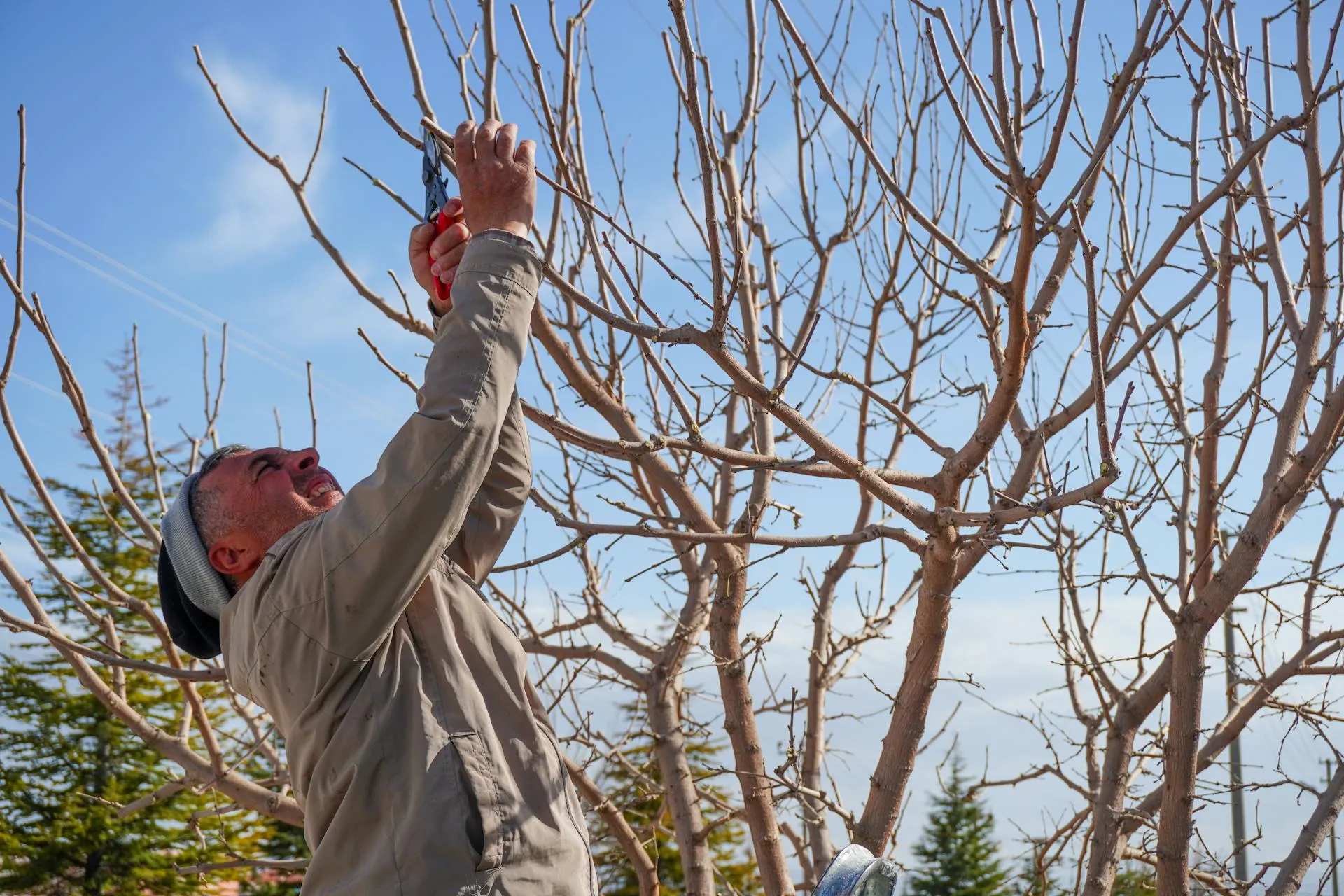
Best Time to Prune Trees in SA: A Month-by-Month Pruning Calendar
Last updated: 5 May 2026.
The best time to prune most trees in South Australia is late winter to early spring (July to early September) — after the worst of the cold has passed but before the new season’s growth starts. This gives you clean cuts, fast healing, and minimal disease pressure. Stone fruit is the major exception (prune in summer to reduce silver leaf disease). Citrus prefers spring after fruiting. Eucalypts and other natives can be pruned almost year-round but are best in cooler months to avoid stress. Heavy structural pruning of regulated trees may need council approval — see our permits guide before starting.
The month-by-month calendar below is for an Adelaide / Mediterranean-climate calendar — hot dry summers, cool wet winters. It works across the metro and the Hills with minor adjustments noted.
SA pruning calendar at a glance
| Tree / Plant | Best months in SA | Avoid | Why |
|---|---|---|---|
| Eucalypts (gum, sugar gum, red gum) | May–August | High summer (Dec–Feb), high fire-risk days | Cooler months reduce stress and reduce summer-drop risk after pruning |
| Native acacias / wattles | After flowering (Aug–Oct) | Before flowering | Don’t sacrifice the flowers; prune light and often |
| Stone fruit (peach, nectarine, plum, cherry, apricot) | Summer (Dec–Feb), immediately after harvest | Winter | Wet winter cuts spread silver leaf and bacterial canker |
| Pome fruit (apple, pear) | Winter (June–August) | High summer | Standard dormant pruning; trains fruiting wood |
| Citrus (lemon, lime, orange, mandarin) | Spring (Sept–Nov) after fruiting | Mid-winter, mid-summer | Fast warm-season healing; avoids cold damage |
| Olives | Late winter to early spring (July–Sept) | Flowering (Oct–Nov) | Productive pruning before flower set |
| Grapevines | Mid-winter (June–August) | Spring after bud-burst | Dormant pruning; bud-burst is too late |
| Jacaranda | After flowering (Jan–March) | Pre-flowering (Sept–Nov) | Late-summer pruning preserves next year’s bloom |
| Plane tree | Winter (June–August) | Active growth | Dormant cuts heal cleanly |
| Liquidambar | Late winter (July–August) | Mid-summer | Sap rises early; later cuts bleed |
| Crepe myrtle | Late winter (July–early Sept) | After bud-break | Encourages summer flowering on new wood |
| Roses (climber / shrub) | July (mid-winter) | Spring after bud-burst | The annual hard prune is a winter job |
| Hedges (box, lilly pilly, photinia, viburnum) | Spring + autumn light trims | High summer (light only) | Two main shapes a year, with maintenance trims |
| Camellias | After flowering (late spring) | Pre-flowering | Light shaping after the show |
| Hibiscus / frangipani | Early spring (Sept) | Winter (cold damage risk) | Warming weather drives fast healing |
| Deciduous ornamentals (claret ash, maple, elm) | Late winter (July–August) | Spring sap-rise | Dormant; reveals structure |
| Conifers / pines | Late winter to early spring | Mid-summer | Avoid resin loss in heat |
| Palms | Anytime — frond removal as needed | N/A | Remove dead/yellow fronds; never the green crown |
Why timing matters
Pruning a tree at the wrong moment doesn’t usually kill it, but it can:
- Spread disease. Silver leaf, bacterial canker and several other tree diseases enter through fresh cuts. The single biggest reason stone fruit is a summer-prune crop in SA is silver leaf, which is a wet-weather disease.
- Bleed sap. Liquidambars, maples, birches and a few other species bleed sap if pruned in early spring. Not lethal, but messy and unsightly.
- Cost you the next bloom. Spring-flowering trees set buds the previous summer. Prune them in autumn or winter and you cut off the show. Late-summer pruning, after flowering, is the rule.
- Stress the tree. Pruning in extreme heat or extreme cold doubles up the stress. The tree was already managing the season; the cuts add load.
- Trigger a regulatory issue. Heavy pruning of a regulated tree (any tree with a 1 m+ trunk circumference, measured 1 m above the ground) can fall under the Planning, Development and Infrastructure Act 2016 — see tree removal permits in Adelaide for the maintenance pruning exemption (30% of the crown, once every five years).
Native trees and eucalypts
Eucalypts and most native species are tougher about timing than imported ornamentals — they evolved in this climate and can take a prune any time they’re actively healthy. The rules of thumb in SA:
- Cooler months are better. May to August is the safe window. Cuts heal before the heat.
- Avoid hot, dry weeks. A 38°C day after pruning a eucalypt can stress the tree and increase summer-drop risk for the remaining limbs.
- Avoid total fire ban days for any work. Chainsaws + dry vegetation + gusty winds is the wrong combination. Plus the fire ban itself prohibits use.
- Light and often beats heavy and rare. A small reduction every couple of years is gentler than a major prune every five.
- Watch the regulated tree threshold. A mature gum is almost certainly regulated. Major reduction work is “tree-damaging activity” under the PDIA and may need council approval. Maintenance pruning is exempt within the 30%-of-crown / five-year limit.
For ongoing canopy management on regulated trees, see our tree pruning service page.
Stone fruit (peach, nectarine, plum, cherry, apricot)
The standout summer-prune crop in SA. Why summer?
Silver leaf disease (Chondrostereum purpureum) is a fungal disease that enters fresh cuts during cool, wet weather. Winter pruning of stone fruit in Adelaide’s wet July is high risk. Summer pruning — immediately after harvest, when the cuts dry out within hours — minimises the infection window.
The standard SA pattern:
- December (cherry, apricot) — prune immediately after the last fruit comes off.
- January (early peaches, nectarines) — same approach.
- February (late peaches, nectarines, plums) — final round of summer pruning.
- Avoid winter pruning entirely unless removing dead or damaged wood in a dry spell.
A summer prune is also lighter than a winter one — you’re tipping back, controlling height, opening the canopy, not restructuring the tree.
Pome fruit (apple, pear)
Apples and pears are the opposite — winter is correct. Prune in June to August while the tree is dormant and you can see the structure clearly. Standard pome-fruit dormant pruning rules apply: open up the centre, take out crossing branches, shorten leaders to maintain height, and renew fruiting wood on a 2–3 year cycle.
Apples in cooler Hills locations (Stirling, Aldgate, Mount Barker) tolerate a slightly later prune (early August) than Plains apples — but the principle is the same.
Citrus
Citrus is a spring-prune crop in SA. The rules:
- Wait until after fruiting. For most varieties (Valencia oranges, lemons that crop year-round) you can pick a cool morning in September or October and work around the remaining fruit.
- Lemon trees tolerate a heavier annual prune than oranges and mandarins. They tend to over-bear and benefit from canopy opening.
- Don’t prune in mid-winter. Cold-damage risk on the cut surfaces is real for citrus, particularly in colder Hills suburbs.
- Don’t prune in mid-summer. Sunburn on newly-exposed inner branches can scald the trunk.
The major exception is dead-wood removal, which can be done any time.
Jacarandas, ornamentals, and the “after flowering” rule
Spring-flowering trees set their buds the previous summer. Pruning them in winter or early spring removes the bloom. The rule is prune after flowering.
- Jacaranda — January to March, after the last purple flowers drop.
- Wisteria — twice a year: a hard summer cut after flowering, plus a late-winter trim of the resulting growth.
- Camellia — after the flush of flowers ends.
- Crab apple, ornamental pear, prunus — after bloom in spring.
Liquidambars and plane trees aren’t in this group — they’re foliage trees pruned in the dormant winter window for clean structural cuts.
Roses and grapevines
Both are mid-winter crops in SA.
- Roses — the traditional date is mid-July. A hard reduction (sometimes called “knee-height pruning”) for hybrid teas and floribundas; structural-only for old-fashioned and David Austin types; very light for climbers (just shorten the laterals). Roses don’t mind the cold cut.
- Grapevines — June to August, after leaf-fall. Standard cane or spur pruning depending on the variety. Pruning after bud-burst is too late and causes “bleeding” from the cuts.
Olives
Olive trees are forgiving but produce best when pruned late winter to early spring (July to early September) before flowering. The Mediterranean-climate match means SA olives behave the way they do in their native range — a productive prune before flower-set, lighter shape work later.
Burnside, Walkerville, Campbelltown and the Adelaide Hills carry many mature olive specimens — particularly in heritage Italian-Australian gardens. Most of these trees are regulated by trunk circumference and may need council approval for heavier work. See Burnside service page for context on the LGA’s approach.
Hedges
Most evergreen hedges in SA work on a two-shape-a-year rhythm with light maintenance trims:
- Spring shape (October–November) after the first flush of growth.
- Autumn shape (March–April) before winter slows everything.
- Light tip-trimming in summer if the shape needs it — short cuts only, ideally early morning, never on a hot day.
Box, lilly pilly (Syzygium), photinia, murraya, viburnum, conifer hedges (cypress, juniper) all follow this pattern. See our hedge trimming service page for the work side.
Palms
Palm pruning isn’t really pruning — it’s frond removal. The rule:
- Remove dead, yellow, or hanging fronds as they appear, any time of year.
- Never remove green fronds from the crown. “Hurricane cutting” (stripping the canopy back to a tuft) is bad practice; it weakens the palm and is banned under most council tree-management policies.
- Inflorescences and old seed pods are routine removals to reduce mess.
For the work itself see our palm tree removal page — it covers maintenance as well as full removals.
Storm season and emergency pruning
Adelaide’s storm season runs roughly June to September. Heavy pruning in the lead-up to that window — May, early June — is sensible if a tree has long, weighted limbs that look storm-vulnerable. Reducing the sail area of a canopy is a real risk-reduction step.
Emergency pruning after storm damage is a separate scope from seasonal work — see our storm damage and emergency removal page.
Council rules to keep in mind
Two things every Adelaide property owner needs to know about pruning:
- Maintenance pruning that doesn’t materially affect a tree’s health or appearance is exempt from the regulated tree rules, and so is removing dead or hazardous wood up to 30% of the crown, no more often than every five years. Anything beyond that on a regulated tree (1 m+ trunk circumference) needs council approval.
- Topping or lopping — severely cutting back a tree to stubs — is “tree-damaging activity” under the PDIA, regulated trees included. Heavy reduction work needs the same approval as removal. See arborist vs tree lopper for the distinction.
The full rules are in tree removal permits in Adelaide.
When to call vs DIY
A reasonable rule:
- DIY — anything you can reach from the ground with a hand-saw or pole-saw, on a tree under 4 m, with no powerlines and nothing valuable underneath. Roses, hedges, ornamentals, fruit trees you’ve owned for years.
- Call an arborist — anything that needs a ladder, climbing, or a chainsaw. Anything within 6 m of a powerline. Anything on a regulated tree. Any pruning where structural decisions matter (which limb stays, which goes).
The cost of an arborist visit for routine pruning is generally lower than people expect — see tree pruning for typical scope and pricing.
FAQs about pruning trees in SA
When is the best time to prune trees in Adelaide? For most trees, late winter to early spring (July to early September) is the best window in Adelaide. The major exceptions are stone fruit (prune in summer to reduce silver leaf disease), citrus (spring after fruiting), and spring-flowering ornamentals like jacaranda (after flowering, in late summer).
Can you prune gum trees in summer? Light maintenance pruning of gum trees in summer is fine if conditions aren’t extreme — but cooler months (May to August) are easier on the tree and reduce post-prune stress. Heavy reduction work should not be done on hot or fire-ban days.
When should I prune fruit trees in Adelaide? Stone fruit (peach, nectarine, plum, cherry, apricot) are summer-pruned in SA — December to February, immediately after harvest, to reduce silver leaf disease. Pome fruit (apple, pear) are winter-pruned (June to August) when dormant. Citrus are pruned in spring after fruiting.
What happens if you prune at the wrong time? Wrong-timing pruning rarely kills a tree but can spread disease, cause sap loss, remove next year’s flowers, or stress the tree during a heat or cold period. Stone fruit pruned in winter is the most common SA mistake.
Do I need council approval to prune a regulated tree? Maintenance pruning that doesn’t affect a regulated tree’s health or appearance is exempt. So is removing deadwood and hazardous limbs up to 30% of the crown, no more than once every five years. Anything beyond that — heavy reduction, topping, lopping — needs development approval under the PDIA.
When should I prune jacarandas? After flowering, January to March. Pruning a jacaranda in winter or early spring removes the buds set during the previous summer and you’ll lose the next year’s bloom.
Is there a worst time to prune? Pruning during extreme heat (38°C+ days), on total fire ban days, during heavy rain, or just before bud-burst on bleeding species (liquidambar, maple, grapevine) is the worst combination. For most species, mid-summer is the worst general window — but as the calendar above shows, that’s exactly when stone fruit goes.
Sources
- PlanSA — Significant and regulated trees (maintenance pruning exemption)
- Primary Industries and Regions SA — Horticulture
This article is general guidance for South Australian gardens. For specific advice on a regulated tree or a heavily structured prune, get a qualified arborist on site.