Tree Fox · Adelaide arborists
Fruit Tree Pruning Adelaide — Stone, Pome and Citrus Calendar
By Tree Fox · Published 5 May 2026
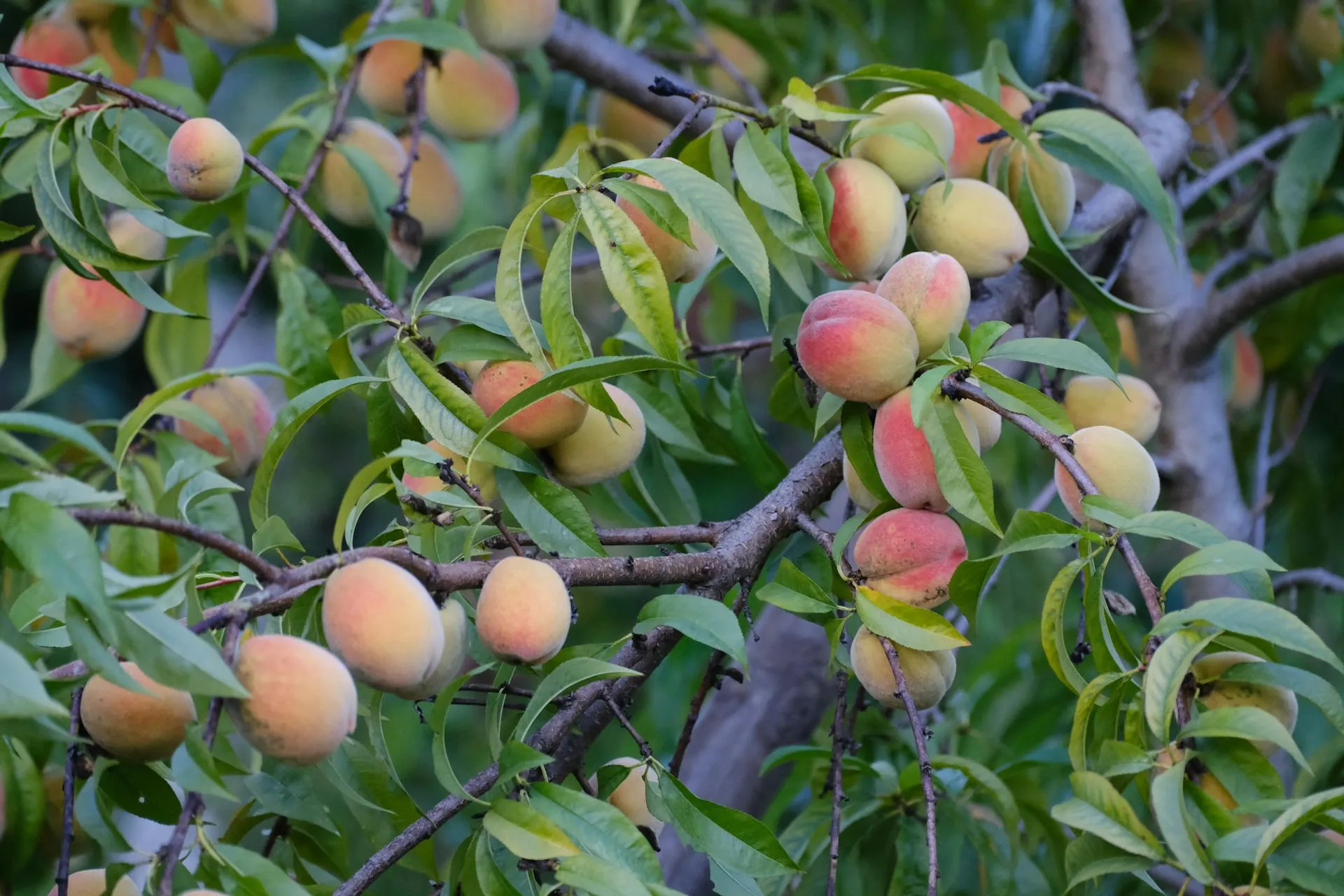
Pruning Fruit Trees in Adelaide — A Backyard Orchard Calendar by Species
Last updated: 5 May 2026.
Fruit tree pruning in Adelaide runs on three different calendars depending on what you’re pruning. Stone fruit — peach, nectarine, plum, cherry, apricot — is pruned in summer, immediately after harvest, to dodge silver leaf disease. Pome fruit — apple, pear, quince — is pruned in mid-winter (June–August) when the tree is dormant and the structure is visible. Citrus is pruned in spring (September–November) after fruiting. Most backyard Adelaide orchards run all three families simultaneously, which means the orchard year has three separate pruning windows, not one.
This is the calendar most northern-hemisphere garden books get wrong for Australia, and the silver-leaf rule for stone fruit is the SA-specific moat — the rest of the world prunes their plums in winter. We don’t.
The orchard year at a glance
| Family | Window | Tree examples | Why |
|---|---|---|---|
| Stone fruit | December – February (immediately after harvest) | Peach, nectarine, plum, cherry, apricot | Silver leaf disease (Chondrostereum purpureum) infects through fresh winter cuts |
| Pome fruit | June – August (mid-winter dormant) | Apple, pear, quince | Dormant; structure visible; standard fruiting-wood renewal |
| Citrus | September – November (spring after fruiting) | Lemon, lime, orange, mandarin, grapefruit | Warm-season healing; outside cold and sunburn windows |
| Other | Variable — see below | Fig, pomegranate, persimmon, mulberry, olive | Species-specific |
The full Adelaide species calendar is in best time to prune trees in SA.
Stone fruit — peach, nectarine, plum, cherry, apricot
This is the rule that matters most: summer prune your stone fruit. Not winter.
Why summer
Silver leaf disease is a fungal disease (Chondrostereum purpureum) that infects stone-fruit trees through fresh pruning cuts during cool, wet weather. Spores are most abundant in winter and early spring. Cuts dry out within a few hours in summer; in winter, with rain and cold, the cuts stay wet for days and the spores have a wide-open infection window.
The disease shows up as a metallic silver sheen on the leaves of an affected branch (the leaves don’t actually contain silver — it’s an air-pocket effect from cellular damage), followed by branch dieback and the appearance of bracket-shaped fungal fruiting bodies on the bark of dead wood. By the time you see silver leaves, the fungus is established. Prevention is the only reliable strategy: prune at the right time, dispose of cut material, sterilise tools.
When in summer
Immediately after the last fruit is off the tree:
- Cherry — December (early-season variety) to early January (late varieties). Cherries are particularly silver-leaf susceptible and are the first stone fruit to come off the tree.
- Apricot — December. Same urgency as cherries.
- Early peach and nectarine — December to early January.
- Mid and late peach, nectarine, plum — January to February.
The cut-and-prune rule of thumb: harvest, then prune within two weeks while the cuts can dry fast in the heat.
How to prune stone fruit
A summer prune on stone fruit is lighter than a winter prune on a pome fruit. You’re tipping back, controlling height, opening the canopy — not restructuring.
- Open vase shape. Three to five main scaffold limbs leaving the trunk at roughly 60° from vertical. Centre open to the sky.
- Tip back this year’s growth by roughly a third. The new wood is next year’s fruiting wood — too long and it whips around in summer storms; too short and the tree fruits sparsely.
- Take out crossing, rubbing and inward-growing branches.
- Renew the producing wood on a 2–3 year cycle — older drooping branches removed, vigorous laterals trained as replacements.
- Maximum 25–30% canopy removal. Heavier than that and the newly exposed bark sunburns in February’s heat.
Tool hygiene
This is the bit most backyard owners skip. Silver leaf is spread on tools as much as on the wind. Sterilise secateurs and pruning saws between trees with methylated spirits, household bleach (1:10 with water), or a commercial disinfectant. Dispose of prunings — burn or bin, don’t compost. Don’t leave stone-fruit prunings on the ground over winter.
Why not winter
Mid-winter pruning of stone fruit in Adelaide is a high-risk move that the rest of the world doesn’t have to think about because they don’t have wet, mild winters and a heavy spore load. We do. Winter pruning of stone fruit is the single biggest mistake imported from northern-hemisphere garden books.
Pome fruit — apple, pear, quince
Pome fruit is the opposite — winter is correct. Prune in June to August while the tree is dormant. The leaves are off, the structure is visible, and the tree will heal cleanly without disease pressure.
When in winter
- June — early dormancy; safe for any pome fruit. Earliest practical window.
- July — peak winter pruning month for apple and pear in Adelaide.
- August — late dormancy; still fine, particularly for cooler Hills locations (Stirling, Aldgate, Mount Barker, Lobethal) where bud break is later.
- Avoid late August onwards in warmer plains gardens — once buds are swelling, the cuts bleed sap and the tree shifts away from clean dormant healing.
How to prune pome fruit
Pome fruit is the textbook backyard prune — open the centre, take out crossing branches, shorten leaders, renew fruiting wood. The structure differs by variety:
Espalier and trained forms. Tied-in leaders at horizontal or 30° angles; spurs renewed on a 3–4 year cycle. Common in heritage Adelaide gardens (the apple espalier is an old SA tradition).
Standard vase form. Three to five main scaffold branches, open centre, similar to stone fruit. The default for most backyard apples and pears.
Central leader form. Single dominant central leader with horizontal scaffold whorls — more common on commercial apple plantings than backyard trees. If your tree was planted as a “central leader” maiden from the nursery, keep it that way.
Spur and tip-bearing varieties differ. Some apple varieties (Granny Smith, Red Delicious, Gala) bear on spurs that live for several years; others (Jonathan, Tydeman’s Late) bear on the tips of one-year-old wood. Pruning that suits a spur-bearer (light, structural) wrecks a tip-bearer (cuts off all the fruiting wood). Identify the variety before you prune.
Apples in the Hills
Apples in cooler Hills locations (Stirling, Mount Barker, Lobethal, Aldgate) tolerate a slightly later prune (early August) than apples on the plains. The principle is identical — prune dormant, before bud-swell — but the calendar shifts a couple of weeks. Cherry orchardists in the same band push the same direction; the dormant window is later in the cooler zones.
Quince
Quinces are the easiest pome fruit to prune. Open centre, deadwood out, shorten the longest leaders, leave alone for two or three years. They tolerate neglect better than apples or pears.
Citrus — lemon, lime, orange, mandarin, grapefruit
Spring after fruiting — September to November — is the citrus window. The full lemon-specific guide is at pruning a lemon tree in Adelaide; the highlights for the rest of the family:
- Lemon — heaviest annual prune of any citrus; 25–35% canopy reduction tolerated.
- Lime — light to moderate; similar to lemon but less aggressive.
- Orange — light prune only (10–15%); over-pruning reduces yield.
- Mandarin — very light (5–10%); sensitive to heavy work.
- Grapefruit — light (10–15%); slow recovery from heavy cuts.
Don’t prune in mid-winter. Cold damage on cut surfaces is real for citrus, particularly in colder Hills suburbs. Don’t prune in mid-summer — sunburn on newly exposed inner branches is the risk.
Other backyard fruit — fig, pomegranate, persimmon, mulberry
The residual category. The rules:
Fig. Light prune in late winter (July–August) for shape; tolerate any time of year for deadwood. Fig wood bleeds white sap when cut — wear gloves; the sap is mildly irritating to skin. Adelaide figs (Black Genoa, White Genoa, Brown Turkey) crop heavily on year-old wood; don’t over-prune or you lose next year’s figs.
Pomegranate. Late winter (July–August). Multi-stemmed shrub form is natural and productive — don’t try to train them to a single trunk. Take out the oldest stems on a 5–7 year rotation.
Persimmon. Late winter (July–August), dormant. Persimmons are sensitive to over-pruning — the tree responds with vigorous shoot growth that doesn’t fruit. Light shape work only.
Mulberry. Mulberries bleed heavily and stain everything for metres around if pruned in late winter. Best window is early autumn (March–April), or a “safe” mid-winter window if you accept the bleed. Don’t prune mulberries near pavers or light-coloured walls.
Adelaide-specific challenges
A few things that catch out backyard orchardists who’ve moved to SA from elsewhere:
Mediterranean climate match. The Adelaide year is hot dry summers and cool wet winters. That’s the climate stone fruit, citrus, olive, fig and pomegranate evolved in. They thrive here without much help. Pome fruit (apple, pear) is the slight outlier — they prefer cooler summers and tolerate Adelaide’s heat with some sunburn protection on the trunks.
Foothills cooler-zone adjustment. Anything above 200 m elevation runs roughly two weeks behind the plains for spring bud-burst and roughly two weeks ahead in autumn. Adjust the pruning calendar by a fortnight in either direction for Stirling, Aldgate, Crafers, Mount Barker.
Summer heat after pruning. A 38°C day three days after a stone-fruit prune can scald newly exposed inner bark. Time summer prunes for cooler weeks where you can — late December into mid-January, before the worst of the February heat.
Frost and cold damage. A cold snap in colder Hills locations (or in the cold-air-drainage frost pockets on Plains blocks) can damage freshly cut citrus. Avoid pruning citrus in mid-winter.
Birds. Adelaide’s backyard fruit is hammered by silvereyes, lorikeets and rosellas. Bird netting (preferably the wildlife-safe knitted variety, not the old-style stretched plastic) is a separate problem from pruning — but pruning to keep trees small and net-able is a real consideration. A 2.5–3 m peach is net-able; a 5 m peach isn’t.
When to call a service
Most backyard fruit trees are owner-prunable. The cases where it’s worth booking a professional:
- Multi-tree orchards where the labour amortises across the visit
- Trees over 4 m where ladder work is unsafe
- Heavily neglected trees needing a multi-year renovation
- Espalier and trained forms that have lost their structure
- Variety identification on heritage trees where you’re not sure if you’ve got a spur-bearer or a tip-bearer
For routine work see tree pruning. For the olive arm of your Mediterranean-climate orchard, see pruning olive trees in Adelaide.
FAQs about pruning fruit trees in Adelaide
Why are stone fruits pruned in summer in SA? Silver leaf disease (Chondrostereum purpureum) is a fungal disease that infects stone fruit through fresh pruning cuts during cool wet weather. Spores are abundant in Adelaide winters; pruning cuts in winter stay wet long enough for infection. Summer cuts dry out within hours and the spore load is much lower. Pruning stone fruit in summer reduces silver-leaf risk to near zero.
When should I prune fruit trees in Adelaide? Three windows depending on the family. Stone fruit (peach, nectarine, plum, cherry, apricot) is pruned in summer immediately after harvest — December to February. Pome fruit (apple, pear, quince) is pruned in mid-winter dormancy — June to August. Citrus is pruned in spring after fruiting — September to November.
Can I prune fruit trees in winter? Pome fruit yes — in fact, it’s the only correct time. Stone fruit no — winter pruning is the main vector for silver leaf disease in SA conditions. Citrus no — cold damage on the cut surfaces is real, particularly in cooler Hills locations.
How much can I prune off in one go? Annual pruning targets vary by species: 25–30% canopy reduction is the working ceiling for stone fruit and lemons; 15–20% for apples, pears and limes; 10–15% for oranges and grapefruit; 5–10% for mandarins. Heavier than this and you trigger sunburn risk and weak regrowth.
Do I need an arborist for fruit trees? Most backyard fruit trees are owner-prunable from the ground or a short stepladder. An arborist makes sense for trees over 4 m, multi-tree orchards where bundled labour saves money, neglected trees needing multi-year restoration, and heritage espaliers or trained forms that have lost their structure.
Should I integrate the orchard with the rest of the garden? Yes — and the right time is between the dormant prune and the spring flush. If you’re planning paths, raised beds, or a pergola near the fruit trees, get a landscaping quote that handles the orchard surround at the same time. Pruning shape and hardscape geometry interact more than most homeowners expect.
Sources
- Primary Industries and Regions SA — Horticulture
- NSW DPI — Silver leaf disease primefact (technical reference)
- Wikipedia — Chondrostereum purpureum (silver leaf fungus)
This article is general guidance for backyard fruit trees in South Australian conditions. For larger trees or commercial-scale orchards, get an arborist on site.