Tree Fox · Adelaide arborists
Trimming a Lemon Tree in Adelaide — Spring Pruning Guide
By Tree Fox · Published 5 May 2026
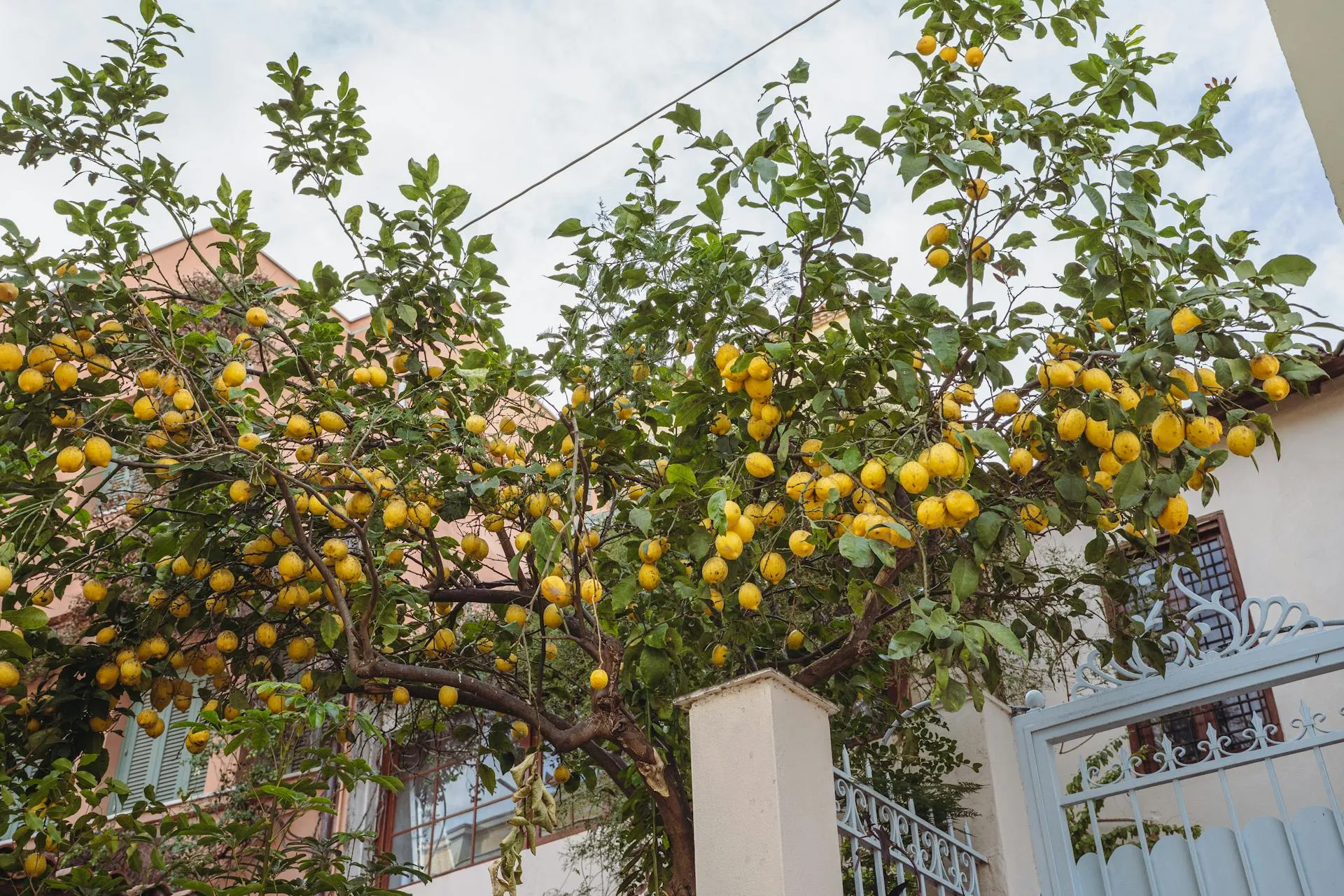
Pruning a Lemon Tree in Adelaide — A Seasonal Guide for Backyard Trees
Last updated: 5 May 2026.
Trimming a lemon tree in Adelaide is a spring job — September to November, after the bulk of the year’s fruit is off. The cuts heal fast in the warming weather, the canopy opens before the summer flush, and you don’t lose next season’s fruit set the way you would with a winter prune. Lemons tolerate a heavier annual prune than oranges or mandarins. Most backyard Adelaide lemons benefit from a real prune every year — they over-bear, they get crowded in the centre, and they reward an open canopy with bigger, cleaner fruit.
This guide covers the timing, the technique, why lemons differ from other citrus, and the specific pest pressure on Adelaide backyard trees.
When to prune a lemon tree in Adelaide
The window:
| Goal | Window | Why |
|---|---|---|
| Annual structural prune | September – early November (spring after fruiting) | Warm weather heals cuts fast; outside cold-damage risk |
| Light shape and tip trim | September – April | Active growth window; quick recovery |
| Deadwood removal | Any time | Dead is dead |
| Avoid completely | Mid-winter (June–July), high summer (December–February) | Cold damage on cuts; sunburn on newly exposed wood |
The two big mistakes Adelaide owners make: pruning in mid-winter (cold damage on the cut surfaces, which is real for citrus, particularly in colder Hills suburbs like Aldgate and Stirling) and pruning in mid-summer (sunburn on inner branches that have suddenly been exposed to direct afternoon sun).
The seasonal calendar across all Adelaide species is in best time to prune trees in SA — citrus sits in spring with the warm-season group.
How to prune a lemon tree
The technique, in order:
1. Take out the deadwood. Anything brittle, grey, or with no leaves anywhere along it. This is non-negotiable and you do it first.
2. Remove suckers from below the graft. Most backyard lemons in Adelaide are grafted — Eureka or Meyer onto a Trifoliata (Poncirus trifoliata) or Citrange rootstock. Suckers from below the graft union are vigorous, thorny, and produce nothing useful. Remove them at the trunk, not at ground level, every year. Look for the graft union — usually 15–30 cm above ground, where the bark texture changes — and treat anything emerging below it as a sucker.
3. Take out water shoots. Vigorous vertical growth shooting straight up from horizontal scaffold limbs. They produce few flowers, shade the productive wood, and crowd the centre. Cut them at the origin point.
4. Open the centre. Aim for an open vase shape — three to five main scaffold branches leaving the trunk at roughly 60° from vertical, with the centre of the canopy clear to the sky. Light has to reach the inside or the inner fruiting wood dies and shifts to the outside, leaving a hollow-cored tree that crops only on the perimeter.
5. Shorten leaders for height control. Most backyard lemons are kept between 2.5 and 3.5 m for ladder access. If yours is taller than you can pick from a short stepladder, take the tallest leaders back to a strong outward-facing lateral. Don’t top to a uniform height — that’s lopping, and lemons respond to it with weak regrowth.
6. Reduce canopy density on the outside. Lemons over-bear. Thinning some of the outer twiggy growth lets light in, reduces fruit numbers slightly, and increases fruit size — usually a net win.
7. Don’t seal the cuts. Citrus heals cleanly without paste or sealer. Cut clean, leave alone.
A reasonable annual prune takes 25–30% of the canopy out. Lemons handle it. Anything beyond 35% is shock pruning and risks sunburn on the newly exposed inner wood — if you’re going to do a hard renovation prune, time it for early September and accept that the tree will look bare for a season.
How lemons differ from other citrus
This is where Adelaide’s citrus owners trip up — they treat the lemon the same as the orange and end up over-pruning one and under-pruning the other.
| Citrus | Annual prune intensity | Why |
|---|---|---|
| Lemon (Eureka, Meyer, Lisbon) | Heavy — 25–35% canopy | Over-bears; benefits from canopy opening; tolerates aggressive work |
| Orange (Valencia, Washington Navel) | Light — 10–15% | Holds shape naturally; over-pruning reduces yield |
| Mandarin / Tangerine (Imperial, Murcott) | Very light — 5–10% | Sensitive to heavy pruning; minimal shaping only |
| Lime (Tahitian, Kaffir) | Light to moderate — 10–20% | Similar to oranges; less canopy opening needed |
| Grapefruit | Light — 10–15% | Slow recovery from heavy cuts |
The lemon’s reputation as the citrus that “responds to a hard prune” is earned. Backyard Eureka lemons in particular tend toward dense, twiggy outer canopies and bare-cored interiors if left unmanaged. Annual moderate pruning keeps them in shape; biannual or skipped pruning lets them slide into the over-bearing pattern.
For the broader backyard orchard calendar — stone fruit, pome fruit, the rest of the citrus group — see pruning fruit trees in Adelaide.
Lemon tree problems in Adelaide gardens
The recurring issues, in roughly the order they show up on backyard trees:
Citrus gall wasp (Bruchophagus fellis). The single biggest pest issue on Adelaide backyard lemons. Look for elongated woody swellings on twigs and branches — galls 2–5 cm long that ruin the fruiting wood. The wasp lays eggs in spring (September–November); larvae develop inside the swellings over summer; adults emerge the following spring. Management is mechanical: prune out and dispose of all galls before adult emergence in late winter (July–August). Don’t compost the prunings — burn or bin.
Citrus leaf miner (Phyllocnistis citrella). Silvery winding trails inside the leaves of new spring and autumn growth. Damage is mostly cosmetic on mature trees; young trees can be set back. Horticultural oil sprayed during flush growth provides reasonable protection. Don’t bother on mature trees that are coping fine.
Scale insects and sooty mould. Sticky black coating on leaves and underlying surfaces (lawn, paving, the car) usually indicates a scale infestation high in the canopy. Several scale species attack Adelaide citrus — soft brown scale, red scale, white wax scale. Horticultural oil at the right rate, applied to wet the underside of leaves and twig surfaces, is the standard treatment. The sooty mould resolves once the scale is controlled.
Sunburn after over-pruning. Direct summer sun on bark that’s been shaded for years is a real burn risk. White trunk paint (acrylic, water-based, applied dilute) is the orchardist’s solution; in a backyard context, time hard prunes for early September so the tree has a chance to grow leaf cover before the worst summer heat.
Fruit drop and split fruit. Usually water-related. Lemons drop young fruit when the tree is moisture-stressed — long dry spells, then heavy watering, are the classic trigger. Split fruit at maturity follows the same pattern. Mulch heavily, water deeply and regularly, and the fruit holds.
Yellowing leaves with green veins. Iron deficiency, common in Adelaide’s alkaline clay soils. Iron chelate (Fe-EDDHA) is the targeted fix. Generic citrus food doesn’t always contain enough chelated iron to correct it.
Winter leaf drop. A normal response in colder Hills locations after a frosty week. The tree refoliates in spring. Don’t prune to “tidy” a leaf-dropped lemon in winter — wait for spring and assess.
When to call an arborist
Most backyard lemons in Adelaide are owner-prunable from the ground or a short stepladder. The ones where it’s worth getting a professional in:
- Mature multi-trunked or large feature lemons over 4 m
- Heavily neglected trees needing a multi-year renovation
- Trees where structural concerns are visible — bark splits, sun-scald cracks, large dead limbs
- Combined service visits — a backyard with multiple fruit trees plus other ornamentals where the labour amortises across the orchard
For routine work see our tree pruning service.
FAQs about pruning a lemon tree in Adelaide
When is the best time to prune a lemon tree in Adelaide? Spring — September to November, after the bulk of the year’s fruit is off — is the best window. The warm weather heals cuts fast, the tree is moving into active growth, and you avoid both cold-damage risk (mid-winter) and sunburn risk (mid-summer).
How hard can I prune a lemon tree? Lemons tolerate a 25–35% canopy reduction in a single annual prune without complaint. Anything beyond 35% is shock pruning — the tree will recover, but you risk sunburn on the newly exposed inner wood and a flush of weak regrowth. For a hard renovation prune, time it for early September and accept a bare-looking season.
Why is my lemon tree losing leaves after pruning? Some leaf drop after a prune is normal — the tree adjusts canopy load to root capacity. Heavy leaf drop usually indicates one of three things: pruning at the wrong time (mid-winter cold damage, or mid-summer heat stress), too much canopy removed at once, or an underlying water or nutrient issue that the prune has revealed. If the tree drops most of its leaves, water deeply, mulch, and wait — lemons usually refoliate within six to ten weeks.
Should I prune off lemons that haven’t ripened? Generally no. Lemons hold on the tree for months — Eurekas and Lisbons ripen progressively from autumn through winter and into spring. Pruning off green fruit is wasted. The exception is a tree that’s so over-loaded that the limbs are bending under the weight — light fruit thinning is fine in that case.
Do I need to seal lemon tree pruning cuts? No. Citrus heals cleanly without paste or sealer. The old-school practice of dabbing pruning seal on cuts has been abandoned in modern arboriculture — sealer can trap moisture and slow the natural compartmentalisation process. Make a clean cut at the branch collar, dispose of the prunings, and walk away.
Sources
This article is general guidance for backyard lemons in South Australian conditions. For larger or structurally compromised trees, get an arborist on site.