Tree Fox · Adelaide arborists
Olive Tree Pruning Adelaide — When, How and Heritage Trees
By Tree Fox · Published 5 May 2026
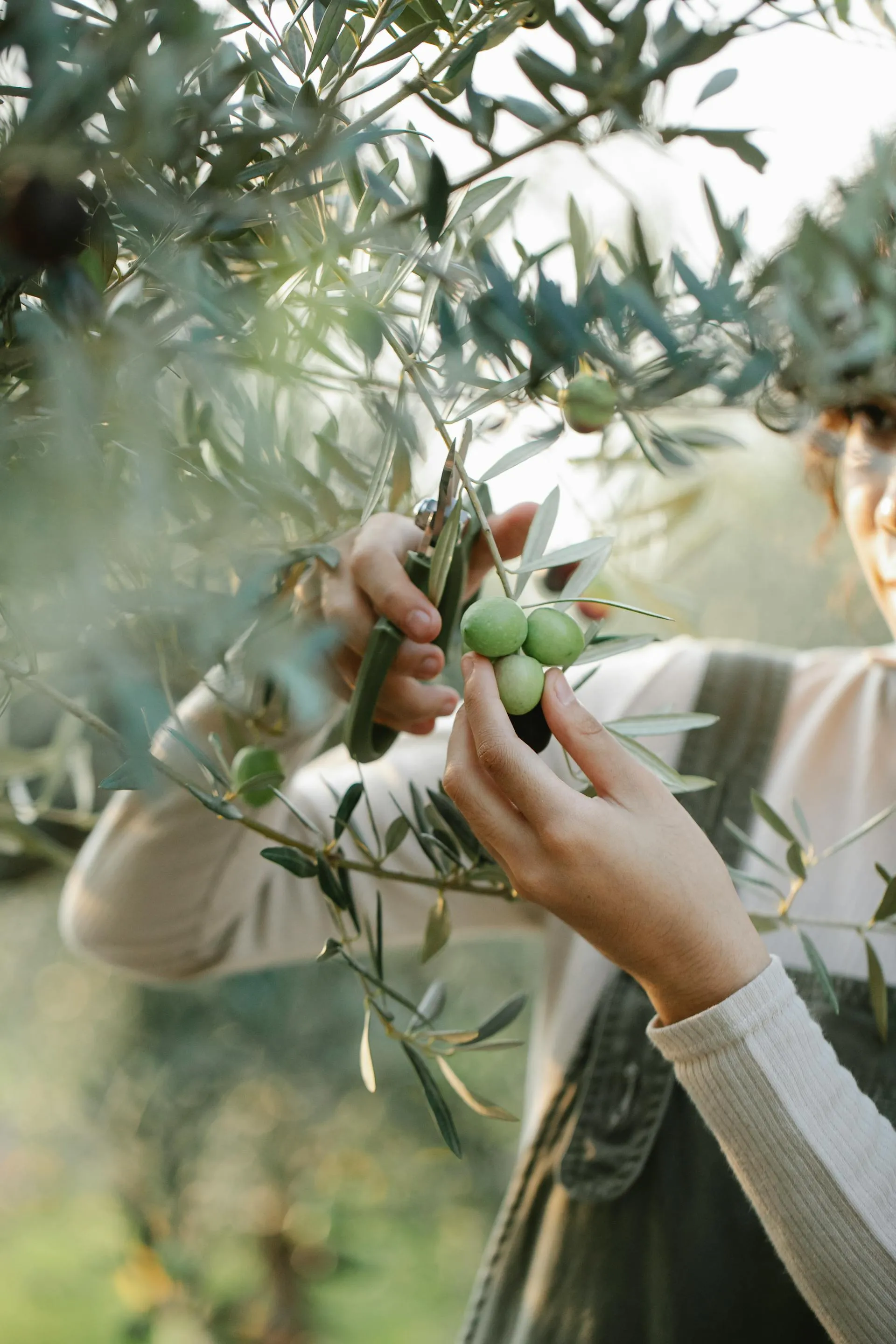
How to Prune an Olive Tree in Adelaide — Productive, Ornamental and Heritage Trees
Last updated: 5 May 2026.
Olive tree pruning in Adelaide is a late-winter to early-spring job — July to early September — done before the flower buds set. Adelaide’s Mediterranean climate is the olive’s native range in everything but latitude, which means the trees behave here exactly the way they behave on a Tuscan or Andalusian hillside: dormant in winter, flowering in October–November, fruiting through autumn. Prune at the right window, in the right shape, and a 60-year-old Burnside heritage tree gives you a respectable annual crop and a tree the council will leave alone. Prune at the wrong window, with the wrong technique, and you lose the season’s fruit set, invite peacock spot, and — if the trunk is over 1 metre around — earn yourself a development application you didn’t budget for.
This guide covers productive pruning, ornamental shaping, what to do with a neglected mature olive, the SA-specific pest pressure, and the regulated-tree rules that catch out heritage-garden owners.
When to prune an olive in Adelaide
The window:
| Goal | Window | Why |
|---|---|---|
| Productive prune (fruit / oil) | Late July – early September | Pre-flower; opens canopy for the new season’s growth |
| Ornamental shape work | Late winter or early autumn (March) | Outside flower set; minimal sap loss |
| Hard renovation of neglected tree | Late winter (July) | Maximum recovery time before summer stress |
| Light tip-trim of hedge or topiary olive | Spring and autumn | Routine maintenance only |
| Avoid completely | Flowering (October–November), high summer (December–February) | Flower drop; heat stress on fresh cuts |
The three big mistakes Adelaide owners make: pruning during flowering and watching the year’s crop hit the ground; pruning in February’s 38°C and watching the tree sunburn; and pruning a tree they didn’t realise was regulated. The first two are horticultural. The third is legal — see the section below.
For the broader seasonal calendar across Adelaide species, the olive entry sits with stone fruit and citrus as the Mediterranean-climate group.
Productive pruning — fruit and oil yield
The aim of a productive olive prune is light, air, and renewal. Olive trees fruit on the previous season’s wood, so this year’s growth is next year’s crop. Three principles:
Open vase shape. Three to five main scaffold branches leaving the trunk at roughly 60° from vertical, with the centre of the tree open to the sky. Light has to reach the inside of the canopy or the fruiting wood there dies and shifts to the outside — you end up with bare-centred trees that crop only on the perimeter.
Renewal cuts on the producing wood. Each year, take out roughly the oldest 20–25% of the producing wood at its origin point. The tree responds with vigorous new growth that becomes next year’s fruiting laterals. Without renewal, fruiting wood ages, becomes pendulous, and crops less.
Manage biennial bearing. Olives are mildly biennial — a heavy crop year is usually followed by a light one. Pruning evens the cycle out: prune harder after the heavy year (taking back vigour) and lighter after the light year (preserving cropping wood).
The technique: clean cuts back to a lateral or to the branch collar, sharp secateurs or pruning saw, no flush cuts, no stubs. On larger limbs (>5 cm diameter) a three-cut method prevents bark tearing — undercut first, top cut second, finish cut at the collar.
A productive olive in Adelaide handles a 25–30% canopy reduction without complaint. Anything more is shock pruning and is reserved for renovation work (below).
Ornamental olives — shape, hedging and lollipop forms
The other half of Adelaide’s olive population is ornamental — heritage character feature trees, lollipop-form garden olives, and hedged olive screens.
Feature trees. Mature ornamental olives — the gnarled, multi-trunked specimens you see in Burnside, Walkerville and Norwood gardens — are usually pruned for character preservation, not yield. Take out crossing branches, deadwood and weak laterals. Keep the silhouette. Avoid the mistake of “tidying” a tree whose value is its asymmetry.
Lollipop forms. Common in commercial landscaping — the standard-trained olive with a clean stem and a tight rounded ball. These need an annual shape (late winter) plus light tip work in spring and autumn. Use shears, not secateurs, for the shape; tidy any lapping cuts with secateurs after.
Olive hedges. Less common but they work. Two formal trims a year (spring and autumn) with light maintenance summer trims. Hedge olives don’t fruit much — most of the cropping wood gets trimmed off — and they tolerate the regime fine.
One Adelaide-specific note on form work: ornamental olives planted before 1990 in heritage gardens are often well past the regulated-tree threshold (1 m circumference). The owner who’s been hedging the same olive for thirty years usually doesn’t realise that hedging it now — beyond the maintenance pruning exemption — would technically be tree-damaging activity under the PDIA. In practice, council enforcement on heritage hedge work is rare, but a major reshape on an over-1 m olive is the kind of work that earns a complaint from a neighbour and a letter from council. See the regulated-tree section below.
Renovating a neglected olive
A neglected olive in Adelaide — abandoned for 10, 20, sometimes 50 years — is one of the more rewarding restoration projects in the trade. The trees are absurdly tough. They almost always come back.
The diagnosis. Walk around the tree. Identify three to five main scaffold limbs that have potential to become the new structure. Note the deadwood — there will be a lot. Check the trunk for cavities, the roots for surface heave, the soil around the base for subsidence.
The plan. A neglected olive renovation is a multi-year project, not a one-day job. The standard pattern:
- Year 1 (winter): Remove all deadwood. Take out crossing, rubbing and inward-growing laterals. Reduce the overall height by no more than 25%. Open the centre of the canopy.
- Year 2 (winter): Continue structural reduction toward the target form. Renewal cuts on the older producing wood. Take overall height down by another 15–20%.
- Year 3 (winter): Refinement. The tree is now back in productive shape. Annual maintenance pruning from here on.
Why three years and not one: olives that lose more than 30–35% of their canopy in a single season respond with a flush of weak vertical growth (water shoots) at the cut points. The growth isn’t structural — it’s stress regrowth. Splitting the renovation across three winters lets the tree rebuild productive wood as you reshape, instead of fighting the tree to keep up.
The exception is a tree that needs to come down regardless — see tree removal for the species-specific cost considerations.
Mature heritage olives and council regulation
The premium-east heritage gardens of Adelaide are full of regulated olives. Burnside, Walkerville, NPSP and Unley all carry mature ornamental and productive olive populations from the late-19th and early-20th-century Italian-Australian and Italianate-revival garden traditions.
The threshold: a tree with a trunk circumference of 1 metre or more, measured at 1 metre above the ground, is a regulated tree under the Planning, Development and Infrastructure Act 2016. At 2 metres around it becomes a significant tree. A century-old olive trunk frequently sits between 1.2 and 1.8 m — well into regulated territory.
The species exemption that doesn’t apply. Olives are not on the listed exempt species in the May 2024 Ministerial Notice. They are subject to the same rules as any other regulated tree.
The dwelling-distance carve-out that does apply. Olives are not eucalypts — the standard “within 3 metres of an existing dwelling or pool” exemption applies to them. So if your old olive is up against the side of the cottage and the trunk is more than 3 m from the closest wall… it’s regulated. If it’s tucked under the eaves and the trunk-to-wall distance is under 3 m, it’s exempt from the regulated-tree rules.
What this means in practice:
- Routine maintenance pruning (up to 30% of the crown, once every five years) is exempt for any olive, regulated or not.
- Deadwood removal is always exempt.
- Hard renovation of an over-1 m circumference olive that is more than 3 m from your dwelling is technically tree-damaging activity. Get an arborist report and a development application before starting.
- Removal of a regulated olive needs a development application even if the tree is dead. The “not regulated when dead” position is unreliable — councils want documentation.
Full regulatory framework in tree removal permits in Adelaide. Burnside-specific enforcement context — relevant to most heritage-olive owners — on the Burnside location page.
Common Adelaide olive problems
Mediterranean-climate match doesn’t mean problem-free. The recurring issues:
Peacock spot (Spilocaea oleaginea). Adelaide’s wet winters create the conditions for this fungal leaf disease. The signs are circular dark spots with concentric paler rings — they look like miniature peacock feather eyes — followed by yellowing and leaf drop. Management is preventative copper spray in late autumn (April–May) with a follow-up in late winter. Pruning to open the canopy is the structural defence — peacock spot needs humid, still conditions to spread, so good airflow reduces pressure significantly.
Olive lace bug (Froggattia olivina). A native sap-sucker that hits Adelaide olives in spring and summer. Look for stippled yellow leaves and small black tar-spots of frass on the leaf undersides. Light infestations don’t matter; heavy ones cause defoliation and yield loss. Monitor in early spring (September) and treat with horticultural oil at first sign of activity.
Biennial fruit drop and inconsistent crops. Most cropping issues on backyard olives trace to one of three causes: insufficient light into the canopy (open it up), poor pollination (olives are wind-pollinated and need a second tree of a different cultivar within 30–50 m), or the natural biennial pattern (manage with pruning, accept the variation).
Suckering from the rootstock. Almost every commercial olive cultivar is grafted onto wild olive rootstock. Suckers from below the graft union are vigorous, thorny and unproductive — remove them at the trunk, not at ground level, the moment they appear. Repeated suckering is normal; ignore it for two seasons and the suckers can overtake the productive crown.
Scale insects and sooty mould. Black sticky leaves usually indicate scale higher up. Treat the scale (horticultural oil) and the mould resolves on its own.
When to call an arborist
Most Adelaide olives can be pruned by the owner. The ones where you call us:
- Trees over 4 m where ladder work would be unsafe
- Regulated olives (1 m+ circumference) where the work is beyond the maintenance exemption
- Multi-year renovation of a long-neglected tree
- Heritage feature trees where the value of the form is part of the property’s value
- Trees with structural concerns — included bark, large cavities, root-zone disturbance
For routine pruning see our tree pruning service. For neighbouring-species work — the rest of your Adelaide backyard orchard — see pruning fruit trees in Adelaide.
FAQs about pruning olive trees in Adelaide
When should I prune an olive tree in Adelaide? Late winter to early spring — July to early September — is the productive prune window in Adelaide. Light shape work can be done in early autumn (March). Avoid pruning during flowering (October–November) or in high summer.
Can I hard-prune a neglected olive? You can, but spread the work across three winters. Removing more than 30–35% of an olive’s canopy in a single season triggers a flush of weak vertical regrowth and stresses the tree unnecessarily. A staged renovation gives you a productive tree in three years; a one-shot hard prune gives you a problem.
Are olive trees regulated in SA? Yes — any olive with a trunk circumference of 1 metre or more (measured 1 metre above the ground) is a regulated tree under SA planning law, and 2 metres or more makes it a significant tree. The standard “within 3 metres of a dwelling” exemption applies to olives (unlike eucalypts), so a mature olive close to the house may still be exempt. Anything beyond maintenance pruning of a regulated olive needs a development application.
How tall should I keep an olive tree? For productive pruning, 3–4 metres is the practical working height for backyard olives — pickable from a short ladder, manageable canopy, sound air circulation. Taller trees produce more but are harder to manage and harder to harvest. Hedge and lollipop ornamental olives are typically kept at 1.5–2.5 metres.
Will pruning reduce fruit set? A correctly timed productive prune in late winter improves fruit quality and yield over time, even though the immediate season’s yield may dip slightly. Pruning during flowering (October–November) does reduce yield — the cuts and the disturbance both interfere with fruit set. The short answer: prune in winter, don’t prune in October.
Sources
- Primary Industries and Regions SA — Horticulture
- PlanSA — Significant and regulated trees
- UC IPM — Peacock Spot on Olive (technical reference)
This article is general guidance for olive trees in South Australian conditions. For a regulated tree, get an arborist on site before any major work starts.