Tree Fox · Adelaide arborists
Large Gum Tree Removal Cost Adelaide — Why a 20m Red Gum Costs $3K+
By Tree Fox · Published 5 May 2026
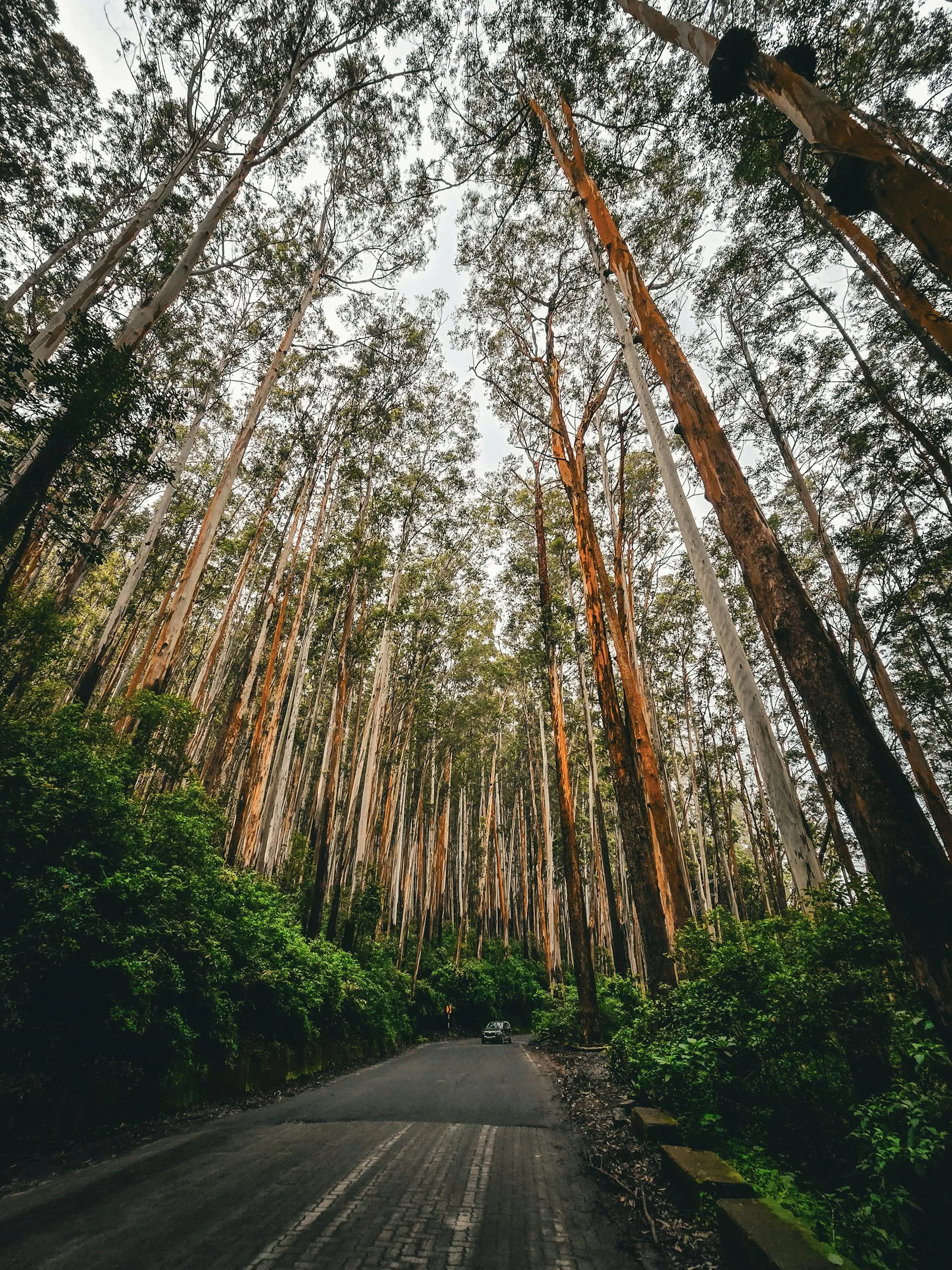
Large Gum Tree Removal Cost in Adelaide — Why a 20m River Red Can Run $3,000–$8,000+
Last updated: 5 May 2026.
Large gum tree removal cost in Adelaide typically lands in the $3,000 to $8,000+ band for trees over 15 metres. A 20-metre river red gum on a flat block with crane access is around $3,500–$5,000. The same tree leaning over a carport with no crane access can run $6,000–$10,000. Add a council application ($400–$800 in arborist fees plus $200–$500 in council fees) and SAPN powerline coordination if relevant, and the genuinely large jobs cross $10,000 routinely. The general tree removal cost guide for Adelaide covers the full range; this article unpacks why the very large eucalypt category is its own pricing tier.
The short version: eucalypts have heavier biomass per metre, more brittle wood, more rigging requirements, more compliance overhead, and a higher safety load than equivalent-sized non-eucalypt trees. The price difference between a 20 m gum and a 20 m maple is real and structural, not arbitrary.
The price band, by job type
Working ranges for Adelaide, May 2026:
| Job profile | Typical range |
|---|---|
| Medium gum, 8–12 m, accessible, no structures nearby | $1,200–$2,500 |
| Large gum, 12–18 m, residential block, climber + EWP | $2,500–$5,000 |
| Very large gum, 18–25 m, climber + crane | $4,000–$8,000 |
| Powerline-adjacent large gum (SAPN coordination) | $5,000–$12,000 |
| Storm-damaged emergency over a structure | $4,000–$15,000+ |
| Council application overhead (regulated/significant tree) | + $600–$1,300 |
These are operator quoting bands — actual quotes vary with access, slope, distance from kerb, drop zone, what’s in the drop zone, what’s underneath the tree, and the day.
Why eucalypts cost more than other large trees
Five reasons. Each adds a real per-metre overhead.
1. Heavy brittle wood. Eucalypt timber is dense — river red gum runs 900–1,000 kg/m³ green, and sugar gum is similar. A single 6-metre log section from a 50 cm-diameter trunk weighs 1.5 tonnes. The rigging gear required (block and tackle, friction devices, chainsaw-grade rigging line) is heavier and the climbing technique is more conservative than on lighter timber.
2. Brittle behaviour under load. Green eucalypt wood is strong but doesn’t bend much before it snaps. A maple branch lowered on a single line will flex; a eucalypt branch will run dead-weight to the ground or, worse, kick sideways at the moment of fracture. Climbers rig eucalypts more conservatively, with redirects, multiple control points, and slower lowering. That’s labour time, billed.
3. Summer drop unpredictability. Even a tree being actively dismantled can shed limbs during the work — eucalypts can drop major laterals on hot calm afternoons regardless of the climber’s plan. The phenomenon is documented and part of the risk-assessment that goes into the quote. See eucalyptus tree care in Adelaide for the summer-drop mechanism.
4. Biomass per metre. A 20 m eucalypt with a typical canopy spread of 12 m is hauling 8–15 tonnes of timber and foliage. The disposal volume alone fills 4–7 truck loads of mulch and log rounds. Disposal at green-waste transfer stations costs $30–$60 per tonne. The disposal line on a large gum quote is rarely under $400.
5. Rigging requirements. Most large gum removals in Adelaide residential blocks are sectional dismantles — the climber takes the tree down in pieces from the top, lowering each section under controlled rigging. That’s the technique that protects the structure underneath. It’s slower than felling and considerably more skilled.
A non-eucalypt tree of equivalent height and trunk diameter — a Liquidambar, a deodar cedar, a London plane — typically runs 30–40% cheaper than the equivalent gum. The difference is genuine.
Crane-assisted removals — when and what they cost
Crane work adds $1,500–$4,000+ to the standard removal cost on top of the climbing rate. Sometimes more.
When a crane is the right call:
- The drop zone underneath the tree won’t take controlled rigging (e.g. a deck, a pool, a shed full of stuff)
- The tree leans toward the structure rather than away from it
- The kerb-to-tree distance allows a 30–50 tonne crane to set up
- Multi-day timber removal is planned anyway, justifying the crane day rate
When an EWP (cherry-picker) is enough:
- The drop zone is open lawn
- The tree is upright, not leaning
- The tree height is within reach of a 15–20 m EWP
- Access is good but a crane wouldn’t fit
Why the crane premium is real. Crane day rates in Adelaide for tree work run $2,500–$4,500 plus a delivery fee; the crew on the ground for the day is $800–$1,500; the dogger/rigger ticket on the crane operator runs $1,200–$2,000 a day. The numbers compound fast. The trade-off is speed — a job that runs 2 days with a climber and EWP often runs half a day with a crane.
For storm-damaged trees in particular, crane work is often the only practical method — see storm damage and emergency removal.
Two-day jobs and multi-day cleanup
Genuinely large gum removals — anything over 25 m, anything with multiple major leaders, anything with a complex drop zone — are often two-day jobs:
- Day 1: dismantle the tree to the trunk; rough-cut log rounds; clear branches and small material
- Day 2: trunk processing into manageable rounds; loading and disposal; stump grinding (separate quote line)
A two-day job for a 25 m river red gum on a Burnside or Walkerville block routinely runs $7,000–$12,000 before stump grinding and council overhead. The premium-east jobs add the further consideration of property protection — old stone fences, heritage paving, mature garden plantings underneath the work zone — which adds rigging and protection time.
Stump grinding on a large gum is its own line item. Grinding a 80 cm-diameter sugar-gum stump is $400–$800. See the broader tree removal cost guide for the full pricing framework across all tree work.
Powerline-adjacent eucalypts
Any eucalypt within 6 metres of a powerline triggers SAPN coordination. The cost overhead:
- Scheduled outage if the line cannot be cleared by sectional rigging alone — booked through SAPN, typically a 3–6 week lead time
- SAPN-approved contractor requirement on some jobs — adds operator cost
- Insulated equipment and additional safety gear — adds equipment hire
A typical powerline-adjacent large gum job runs $5,000–$12,000, of which $1,000–$2,500 is direct powerline-coordination overhead. The premium is unavoidable — DIY work near powerlines is illegal, dangerous, and the SES emergency line gets called when it goes wrong.
For more detail on the SAPN side of the work, see our forthcoming guide on trees near powerlines in Adelaide.
Council application overhead on regulated eucalypts
Eucalypts are the species the regulated-tree rules were tightened around. Any gum with a trunk circumference of 1 m or more is regulated, regardless of distance to a dwelling — the standard 3-metre dwelling exemption that applies to most species doesn’t apply to eucalypts, corymbias or angophoras.
The application overhead on a regulated gum removal:
| Item | Typical cost |
|---|---|
| Arborist report (AQF Level 5) | $400–$800 |
| Council application fee | $200–$500 |
| Replacement planting (if required by council) | $200–$600 |
| Total compliance overhead | $800–$1,900 |
Add this to the removal cost. A $5,000 removal becomes a $6,000–$7,000 project once the application is included. Heritage zone councils (Burnside, Unley, NPSP) sometimes refuse the application — at which point the owner has paid the arborist for a report, paid the council application fee, and ended up with a tree that legally must stay.
The application is real. The risk of refusal is real. The risk of unauthorised removal is also real — the Burnside conviction of February 2025 set the $10,000 fine precedent, and the May 2024 reforms increased maximum penalties for unauthorised work on a significant tree to five-figure territory. Full framework in tree removal permits in Adelaide.
Real Adelaide case bands
Three example projects, with rough numbers:
Case 1 — 10 m sugar gum, flat block, no structures nearby. Climber + EWP, half-day job, kerbside disposal access. $1,800–$2,500. No council application required (under regulated threshold by trunk diameter, in this example).
Case 2 — 18 m river red gum over a carport, trunk 1.4 m circumference (regulated). Climber + EWP + sectional rigging over the carport. Full day. Property protection setup. Stump grinding follow-up day. $4,500–$6,500 for the removal and stump. Add $1,000–$1,500 in arborist report and council application overhead. Total project: $5,500–$8,000.
Case 3 — 22 m lemon-scented gum near boundary, leaning toward neighbour’s house, on a Burnside block. Crane + climber + dogger. Two-day job. Heritage-character council application. $9,000–$13,000 for the removal. $1,300–$1,800 in council and arborist fees. Replacement planting requirement adds $300. Total project: $10,500–$15,000.
These are not extreme cases. They are typical of the work that comes through the tree removal service on premium-east blocks.
How to keep the cost down (without cutting corners)
Things that legitimately reduce the cost on a large gum removal:
- Leave the wood on site. If you’ve got space for log rounds and don’t mind splitting them, a $400–$700 disposal line disappears.
- Combine with stump grinding in the same visit. The stump grinder being on site saves the second-visit callout fee.
- Combine multiple trees in one quote. The crew is on site anyway; per-tree rate drops 15–25%.
- Schedule for the right time. Outside storm season (Oct–May), outside peak summer holidays — operator demand is lower and quoting is sharper.
- Get the council application done before the work starts. A removal scheduled around a still-pending application costs more in operator delays than the application fee itself.
Things that don’t legitimately reduce the cost:
- “I’ll do the climbing myself, you do the lowering.” No.
- “We don’t need an arborist report for this one.” Sometimes legally true; on a regulated gum, never.
- “I want it down before settlement; can we skip the council bit?” Vendor pre-sale removal of a regulated tree without approval transfers to the buyer’s risk in some scenarios. Don’t do this.
- Hiring the cheapest quote and discovering halfway through that the operator isn’t insured. See arborist vs tree lopper for the credentials side.
FAQs about large gum tree removal cost in Adelaide
How much does it cost to remove a large gum tree in Adelaide? A large gum tree (15–25 m) typically costs $3,000–$8,000 to remove on a residential block in Adelaide, plus $800–$1,900 in council and arborist application overhead if the tree is regulated. Powerline-adjacent jobs add $1,000–$2,500 in SAPN coordination cost. Trees over 25 m or with complex access can exceed $10,000.
Do I need a crane to remove a 20 m gum? Sometimes. A crane is needed if the drop zone underneath won’t take controlled rigging (a deck, pool, full shed, neighbour’s structure), if the tree is leaning toward something it shouldn’t fall on, or if multi-day rigging would be slower and more expensive than a half-day crane job. An open backyard with an upright tree usually doesn’t need a crane — a climber and an EWP do the job.
Why is gum tree removal more expensive than other species? Eucalypt timber is denser (around 900–1,000 kg/m³ green for river red gum), more brittle under load, and more biomass per metre than equivalent non-eucalypts. The rigging is more conservative, the disposal volume is higher, and the safety margin for summer branch drop is built into the quote. The result is a 30–40% premium over non-eucalypt trees of equivalent height.
Should I document the tree before the removal? For heritage properties, insurance claims, and any tree that has shaped the streetscape for decades, yes. A short aerial documentation pass from Adelaide Drone Services before a large gum comes down captures the property in its existing state — useful for council records, neighbours, and the next owner.
Can I leave the wood on site to save money? Yes, and it usually saves $400–$700 on the disposal line. The catch is whether you want a pile of 1.5-tonne log rounds in the backyard for several months while you split them or arrange a separate disposal. Most operators are happy to leave the timber if there’s room and access for the truck to bypass the disposal step.
How long does a large gum removal take? A 15 m gum on a flat block with good access is usually a single-day job. A 20–25 m gum with sectional dismantling is often a two-day job, with stump grinding on a third day. A crane-assisted job can compress a two-day removal into half a day if the access supports a crane setup. Add 3–6 weeks of lead time if SAPN powerline coordination is required.
Sources
This article gives operator quoting bands for May 2026 in Adelaide. Every tree is different — get a site quote for your specific job.