Tree Fox · Adelaide arborists
Stump Grinding vs Stump Removal — Adelaide Guide
By Tree Fox · Published 5 May 2026
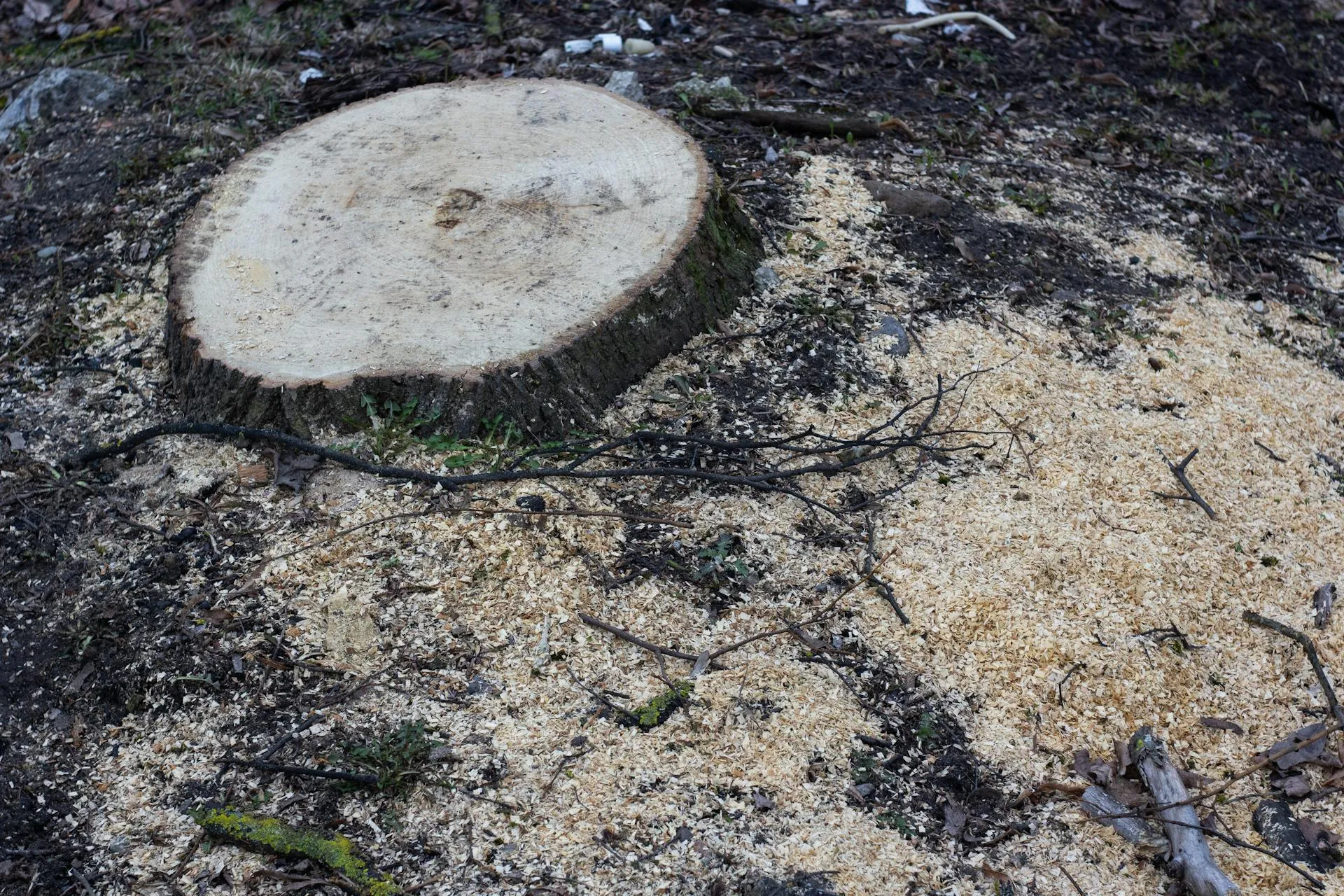
Stump Grinding vs Stump Removal: What’s the Difference (and Which Do You Need)?
Last updated: 5 May 2026.
Stump grinding uses a high-speed cutting wheel to chip a tree stump down to about 150–300 mm below ground level, leaving the root structure to decompose naturally over a few years. Stump removal physically excavates the entire stump and the major root ball out of the ground, leaving a clear hole. Grinding is faster, cheaper, and the right choice for most Adelaide gardens. Full removal makes sense when you need clear soil at depth — for a pool, a slab, deep landscaping, or replanting in the same spot.
Below: how each works, what each costs in Adelaide, and the practical situations where one beats the other.
Quick comparison
| Stump Grinding | Stump Removal | |
|---|---|---|
| What happens to the stump | Chipped down to 150–300 mm below ground level; mulch left on site or removed | Physically excavated, stump and major roots pulled out, hole left |
| What’s left in the ground | Lateral roots remain, decompose over 3–7 years | Cleared to depth of excavation; minor remaining roots only |
| Time on site | 30 min – 2 hours per stump | Half day to full day |
| Equipment | Stump grinder (towed or self-propelled) | Excavator or large mini-digger, often with chains and tipper |
| Mess and disturbance | Low — confined to the immediate area | High — large hole, excavated soil pile, machinery tracks |
| Replanting in same spot | Possible after backfill, with care | Yes, easier — clean soil profile |
| Cost in Adelaide | $80–$400 per stump as add-on; $200–$500 minimum standalone | $400–$1,500+ per stump depending on size and access |
| Best for | Most residential cases | Pool installs, slab pours, deep landscaping, replanting same species |
How stump grinding actually works
A stump grinder is a machine — looks like a small tractor with a horizontal cutting wheel out the front — that chips wood at high speed. The operator positions the wheel against the stump and works it back and forth, taking off 25–50 mm at a pass, until the stump is below ground.
The depth target is usually 150–300 mm below ground level:
- 150 mm is enough for lawn or paving over the top.
- 200–250 mm is the standard for most Adelaide jobs.
- 300 mm+ is needed if you’re laying a slab, planting a deep-rooted replacement, or putting in a pool.
What’s left:
- A pile of wood chips (the chipped stump material) — usually about three to four times the volume of the stump itself, because chipped wood expands.
- A “saucer” of soft, friable ground where the stump was.
- The lateral root system, still in the soil, which decomposes over the next 3–7 years depending on species.
The chips are typically:
- Left on site as mulch (cheapest option — the customer rakes them around the garden), or
- Bagged and removed for an extra fee, or
- Backfilled into the saucer with topsoil to make a level surface.
For the full service-side detail see our stump grinding page.
How full stump removal works
Full stump removal is excavation. The crew brings an excavator or mini-digger, digs around the stump to expose the major roots, cuts those roots, and lifts the whole stump and root ball out of the ground.
What’s left:
- A hole — typically 1–2 m wide and 0.5–1 m deep depending on the original stump size.
- A pile of excavated soil, which is usually then backfilled (often with imported topsoil or sand depending on what’s going in next).
- Minor lateral roots that have been cut off close to the stump but remain in the surrounding soil.
This is heavier work. Two practical implications:
- Access matters more. The excavator needs to drive in. A pool-install in a tight Adelaide back yard with a 1.2 m side gate may require either a smaller machine (longer day) or breaking through fencing.
- Site disturbance is significant. Tracks across lawn, soil piles, and a large hole that needs filling. Plan the work so that the disturbance is acceptable for what comes next.
For the service-side detail, see our stump removal page.
Cost: what each costs in Adelaide
These are the typical full-service ranges in 2026.
Stump grinding
- Add-on to a same-day tree removal: $80–$400 per stump, depending on diameter and root spread.
- Standalone callout (truck and grinder come out for stumps only): $200–$500 minimum, then per-stump pricing on top.
- Multiple stumps in one visit: per-stump rate drops sharply after the first because the truck is already there.
What pushes a grinding price up:
- Diameter and root flare. A 1.2 m stump with two-metre buttress roots needs 90 minutes of grinding; a 400 mm stump on lawn needs 20.
- Hard surface contamination. Stones in the soil, exposed concrete around the base, fence posts within the grind radius — all wear the cutting teeth and slow the work.
- Restricted access. A grinder that needs to be hand-walked through a narrow gate adds setup time.
- Chip removal. Leaving the chips on site is free; bagging and disposing adds material disposal cost.
Stump removal
- Small stump, easy access: $400–$700.
- Medium stump, standard residential: $700–$1,200.
- Large stump or restricted access: $1,200–$1,500+.
- Multiple stumps in one excavation visit: per-stump cost drops with the day rate.
The cost difference between grinding and full removal is 2–4x for a comparable stump — driven by the larger machinery, the longer time on site, the soil disposal, and the backfill.
For pricing on the tree above the stump, see tree removal cost in Adelaide.
When grinding is the right answer
For most Adelaide residential cases, stump grinding is the better choice. Specifically:
- You want a level lawn or paved surface. Grinding to 200 mm and backfilling with topsoil gives you a clean, level area within a day.
- The stump is in an established garden bed. Minimal disturbance to surrounding plantings.
- You’re not replanting in exactly the same spot. Replanting a few metres away is easy; the remaining lateral roots don’t matter.
- Cost matters. Grinding is significantly cheaper.
- You’re time-constrained. A grinding job is a half-day; a removal is a full day or two.
- The block is tight. A stump grinder fits where an excavator won’t.
The remaining lateral roots are not a problem in most situations — they decompose over a few years and add organic matter to the soil as they go.
When full removal is the right answer
There are real situations where grinding isn’t enough:
1. You’re putting in a pool
A pool excavation needs clear soil to depth. Lateral roots intersecting the pool shell can damage the structure as they decompose and shift. Most pool installers want stumps fully removed before they start. See our land clearing page for site-prep work.
2. You’re pouring a slab or footings
Concrete over decomposing roots eventually settles unevenly. For a granny flat, an extension, a shed slab, or any structural footings, the stump and major roots should be excavated.
3. You’re replanting the same species in the same spot
Some species (notably plane trees and certain eucalypts) are susceptible to soil-borne fungi that persist around the old stump. Replanting the same species in the same hole — especially if the original tree died from disease — sets the new tree up to be infected by the same pathogen. Full removal plus soil replacement is the safer approach.
4. The stump is in the way of deep landscaping
Underground services, deep retaining walls, terracing, or any earthworks that need clear soil profile through the stump’s footprint.
5. You want a clean visual with no recovery time
A ground stump leaves a level area but the chip mulch and saucer are visible for a few weeks. A removed stump, once backfilled, is invisible immediately. For pre-sale presentation work, this matters.
6. The stump has root suckering issues
Some species (some eucalypts, willows, certain palms, Robinia) regrow from the stump or from lateral roots even after the trunk is removed. Grinding to 200 mm usually stops this, but for species with aggressive suckering and where you don’t want any regrowth at all, full removal is more reliable.
What about chemical stump treatment?
You’ll see “stump killer” products and DIY methods online — drilling holes, filling with copper sulphate or commercial herbicide, waiting for the stump to decompose.
Honest assessment:
- It works slowly — months to years for the stump to break down enough to be useful.
- The stump remains physically in the ground for the duration. You can’t put a lawn over it.
- Some chemicals contaminate the soil for replanting. Read the label carefully.
- It’s only worth doing for inaccessible stumps where neither a grinder nor an excavator can reach.
For most cases where someone is considering chemical treatment, grinding is faster, cheaper in opportunity cost, and gives a usable surface immediately.
Council rules — does the stump need approval?
Once a regulated tree has been legally removed (with approval if required, or under an exemption), the stump itself is generally not regulated separately. You can grind or remove it without further approval.
Two practical caveats:
- If the tree wasn’t legally removed, the stump is evidence. Grinding it doesn’t make the original problem go away and may compound it. If you’ve inherited an illegally-removed stump on a property you’ve just bought, get advice before grinding.
- Stumps of significant trees that are individually listed in Part 10 of the Planning and Design Code may have residual protections. Check the current Part 10 entry for your council before grinding a listed-tree stump.
The full background on the regulated tree regime is in tree removal permits in Adelaide.
What about the wood chips? Can I use them?
Yes, with some limits.
- As mulch on garden beds — generally fine, but let chipped eucalypt sit for a few weeks before using it on edible-garden beds (some allelopathy concerns).
- Around the same species — generally fine; trees evolved to break down their own debris.
- In compost — yes, mixed with greener material. Stump chips alone are too high in carbon for fast composting.
- Avoid using stump chips around young replanted trees of a different species, or in raised vegetable beds, until the chips have aged for a season.
Some species shouldn’t be used as mulch:
- Black walnut (very rare in SA but worth flagging) — juglone toxicity.
- Camphor laurel — toxic compounds; better disposed.
- Diseased species — if the original tree had Armillaria, Phytophthora or other soil-borne pathogens, the chips should be removed not mulched.
Common after-the-grind issues and how to handle them
A few things people don’t expect after a grinding job:
- The ground sinks for a few weeks as the chips settle. Top it up with soil if you want a permanent level surface.
- A small mushroom flush can appear in the chip-and-soil mix — usually saprophytic decomposers, harmless, dies off in a couple of months.
- Slight regrowth from un-ground roots — light, easy to mow off; if persistent, treat with a stump-killer paint on the regrowth shoots.
- Moisture changes in the soil. The decomposing roots use moisture. Water more in the first season around replantings nearby.
- Pest harbourage in the residual root mass. Grinding leaves the lateral roots to decompose, and decaying timber close to a house is exactly what subterranean termites scout. If your home is termite-prone or you’re sitting on multiple old stumps, a complementary Adelaide termite treatment closes the loop on the pest risk.
FAQs about stump grinding vs stump removal
What’s the difference between stump grinding and stump removal? Stump grinding chips the stump down to 150–300 mm below ground level using a cutting wheel, leaving the lateral roots to decompose. Stump removal physically excavates the entire stump and root ball out of the ground, leaving a clear hole. Grinding is cheaper and faster; removal is needed when you require clear soil at depth (pool, slab, replanting same species).
Is stump grinding cheaper than stump removal? Yes, significantly — usually 2 to 4 times cheaper for a comparable stump. In Adelaide, grinding runs $80–$400 per stump as an add-on to a tree removal, or $200–$500 minimum standalone. Full removal runs $400–$1,500+ depending on size and access.
Will the roots regrow after stump grinding? For most species, no. Grinding to 200 mm below ground level is generally enough to stop regrowth. A few species (some eucalypts, willows, certain palms) can sucker from lateral roots after grinding — for these, full removal or follow-up herbicide treatment is more reliable.
How deep do they grind a stump? Typically 150–300 mm below ground level. 150 mm is enough for lawn or paving over the top; 200–250 mm is the Adelaide standard; 300+ mm is needed for slabs, deep planting, or pool installs.
Can I grind a stump myself? Stump grinders are available for hire from most equipment-hire yards. The work itself is straightforward in principle but the machines are heavy, the cutting teeth are dangerous, and one slip can do thousands of dollars of damage. For anything bigger than a 200 mm stump, the time and risk usually don’t justify the DIY saving.
How long does it take to grind a stump? A small stump (under 400 mm) takes 20–40 minutes. A medium stump (400–800 mm) takes 45–90 minutes. A large stump with significant root flare can take two hours or more. Multiple stumps in one visit are faster per stump than singletons.
Can I plant a new tree where the old one was? After grinding, yes — if you backfill with fresh topsoil and allow some settling time. The exception is if you’re replanting the same species, particularly if the previous tree died from soil-borne disease — for that case, full removal is safer.
Do I need council approval to grind a stump? Generally not — once the original tree was legally removed, the stump itself isn’t separately regulated. Significant trees individually listed in Part 10 of the Planning and Design Code may have residual protections; check before grinding a listed-tree stump.
Sources
This guide reflects typical Adelaide stump-work pricing and practice as of May 2026. Exact pricing for your stump depends on diameter, access, and what you need afterwards — quotes are free.